 Select Languange
 English
 Spanish
 Polish
 Japanese
 Italian
 French
Japan’s KIMURA Adopts a GREENMAX Soft Plastics Recycling Machine to Improve Recycled Pellet Quality
For film recyclers, pellet quality depends on more than the pelletising equipment. Sand, foreign matter and incompatible plastics must be removed before the material reaches this stage. If the feedstock is inconsistent, the quality of the finished pellets is likely to vary as well.
KIMURA, a Japanese company with around 60 years of experience in plastics recycling, recently selected a GREENMAX film washing system. The aim is to improve the preparation of recovered PE film and produce more stable recycled material.
The following video, filmed by the GREENMAX team, shows the complete trial process. LDPE pallet wrap is cleaned on the washing line and then fed directly into a large agglomeration system. KIMURA was satisfied with the finished material:
Mixed film waste can lead to inconsistent pellet quality
KIMURA operates recycling facilities across Hokkaido, Chiba, Hyogo, Kyushu and Yamaguchi. The company handles a range of recovered materials, including PET bottle bales, waste paper, plastic film and compacted foam.
Its relationship with INTCO Recycling, the parent company of GREENMAX, began around 2000. KIMURA supplies approximately 100–150 tonnes of EPS blocks each month, forming the basis of a long-term recycling partnership.
Since 2020, KIMURA has also processed recovered plastic film into recycled pellets. Some are sold within Japan, while the remainder is supplied to INTCO Recycling for further use.
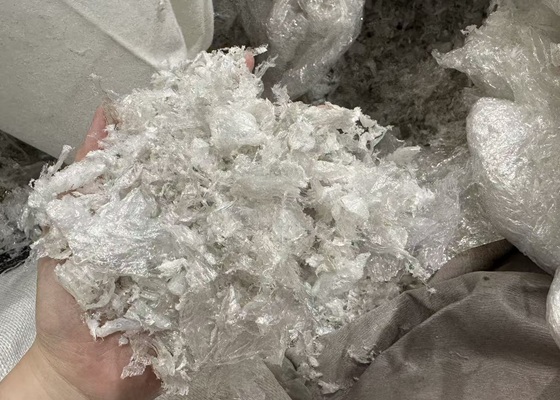
The difficulty lies in the variable condition of the incoming film. Different loads may contain soil, dust, surface residue or other plastics. These contaminants can affect processing and leave some recycled pellets unsuitable for their intended applications.
This is a familiar issue in the recovery of logistics film and industrial pallet wrap. In Australia, commercial pallet wrap recycling faces similar practical demands: films need to be separated from labels, straps and general waste before they can be washed and reprocessed effectively.
Better preparation before pelletising
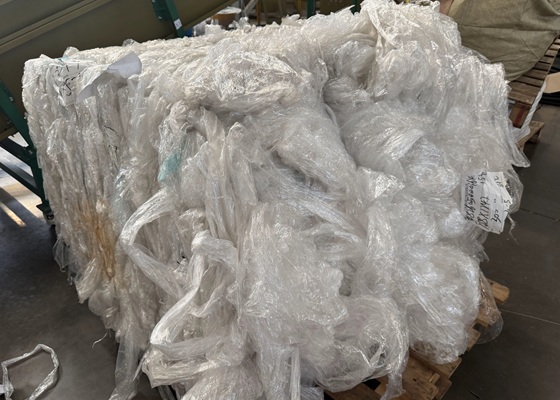
GREENMAX approached the project by looking beyond the pelletising stage. Based on the condition of KIMURA’s material, the recommended process begins with shredding and sorting, followed by thorough washing before the PE film moves to downstream processing.
A properly configured soft plastics recycling machine must do more than rinse the film. It needs to reduce sand, dirt and other contaminants while preparing a consistent feedstock for agglomeration and pellet production.
For businesses assessing a plastic film washing line Australia solution, this preparation stage is particularly relevant when handling used pallet wrap, logistics packaging and other flexible PE films. Cleaner input makes the later processing stages easier to control.
Recycling experience informs the system design
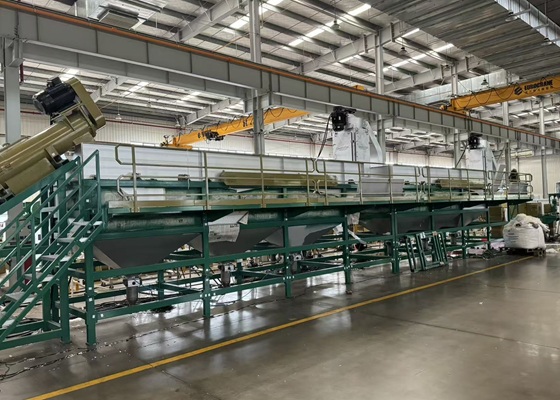
GREENMAX manufactures film washing equipment, while INTCO Recycling has extensive experience in purchasing, processing and reusing waste plastics and recycled materials. This practical background helps the team assess how washing performance and feedstock condition affect the quality of the final recycled product.
During the project, KIMURA reviewed the process design and individual components of the GREENMAX system, contributing feedback based on its own operating experience. After several months of discussion, the company selected the GREENMAX soft plastics recycling machine to strengthen its PE film preparation process.
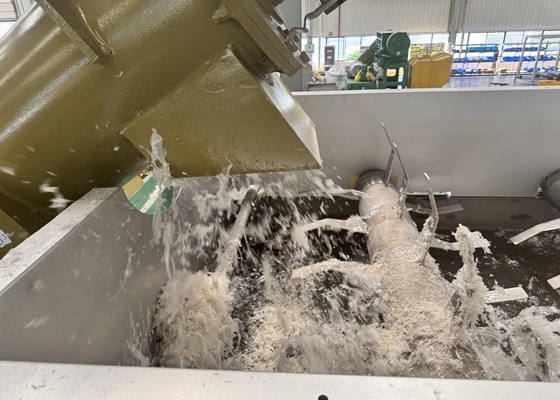
Full pallet wrap washing and agglomeration trial at GREENMAX
Before shipment, GREENMAX carried out a complete trial using pallet wrap supplied by KIMURA. The film passed through shredding, sorting and washing, removing sand, dust and surface contamination. It was then dewatered and dried.
The clean PE film was transferred directly to a large agglomeration system. The process produced clean, uniform PE agglomerate suitable for further recycling. It also confirmed that the washing and downstream equipment could operate together smoothly.
The trial provided KIMURA with a practical basis for improving its pallet wrap recycling operation and producing more consistent recycled feedstock.
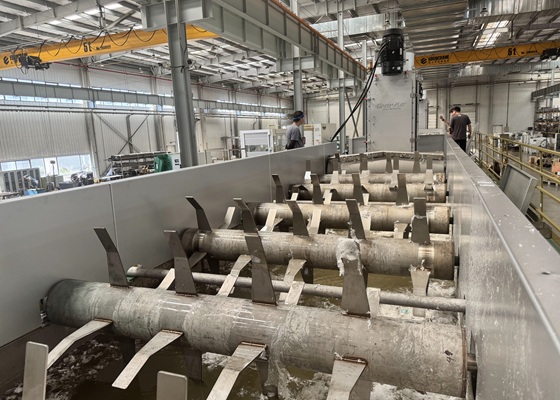
Following final inspection, the complete system was packed and shipped to Japan. KIMURA will use it to develop a more controlled process covering PE film washing, agglomeration and subsequent material production.
For recyclers dealing with mixed film sources, heavy contamination or fluctuating pellet quality, a suitable soft plastics recycling machine can improve the material entering the downstream process. Effective washing does not replace pelletising, but it gives that stage a cleaner and more consistent starting point.