 Select Languange
 English
 Spanish
 Polish
 Japanese
 Italian
 French
Silicon Valley High-Tech Company Uses A-C100 for Laboratory EPS Packaging Waste
Managing Bulky EPS Packaging Waste
This Silicon Valley company supplies advanced material solutions to the semiconductor, electronics manufacturing, life sciences and biopharmaceutical sectors across North America.
Its production and logistics activities generate a steady stream of EPS packaging waste. Although lightweight, the material occupies considerable space before compaction and is inefficient to transport. As volumes increased, the company’s existing collection arrangement no longer met its requirements for site management, operating costs or environmental performance.
The company therefore began looking for an on-site volume reduction system that could support more practical laboratory EPS packaging recycling. After reviewing the waste type, available space and processing requirements, it chose to work with GREENMAX.
Four Practical Challenges with EPS Waste
1. A consistent source of packaging waste
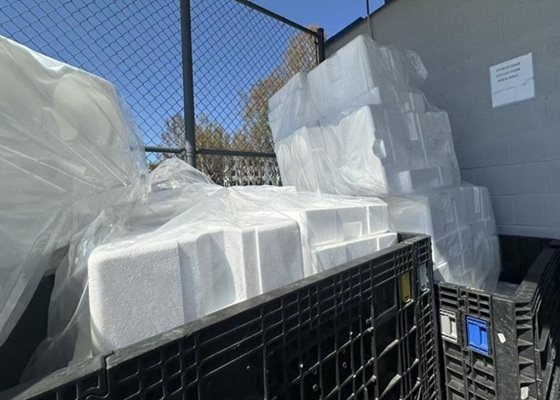
Most of the EPS came from used insulated reagent boxes and protective packaging removed from equipment components. The material had a typical density of around 1–1.5 lb/ft³, or approximately 16–24 kg/m³.
2. Large volumes occupying valuable space
The facility generated around three bags of EPS waste each day. These were stored in a designated outdoor area, where the loose foam accumulated quickly and created additional pressure on site organisation.
3. Frequent and increasingly expensive collections
The bagged material was transported to landfill in a 53-foot trailer. Depending on production levels, the company required between one and three trailer loads per week. A third-party waste contractor generally collected the foam once or twice a week, charging approximately US$500–700 per service.
4. Limited recovery of the material’s value
As production expanded, both the waste volume and collection costs continued to rise. The company wanted to reduce its reliance on landfill and establish a reliable process for recycling EPS insulated boxes and protective packaging. The aim was to turn a paid waste stream into a material suitable for downstream recovery.
A Customised Polystyrene Recycling Solution
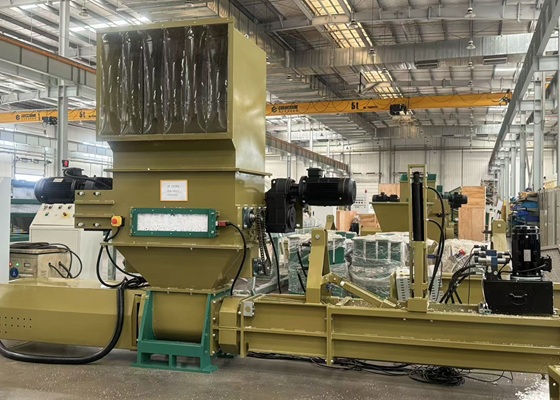
Based on the customer’s waste profile and expected throughput, GREENMAX configured an A-C100 EPS compactor for the reagent boxes and protective packaging.
The company also placed a strong emphasis on 5S workplace management and keeping the processing area clean. Protective curtains and covers were therefore added to the equipment to limit the spread of lightweight foam fragments during shredding.
In October 2025, the GREENMAX team visited the facility to confirm the proposed layout, review the installation area and answer operational questions. Space had already been reserved beside the existing EPS storage zone. Once commissioned, the waste could be processed where it was generated instead of being bagged and moved outdoors for collection.
The compacted EPS can then enter the downstream polystyrene recycling system as a recoverable raw material. This arrangement has improved on-site waste handling while creating a more complete process for laboratory EPS packaging recycling and supporting the company’s wider ESG objectives.
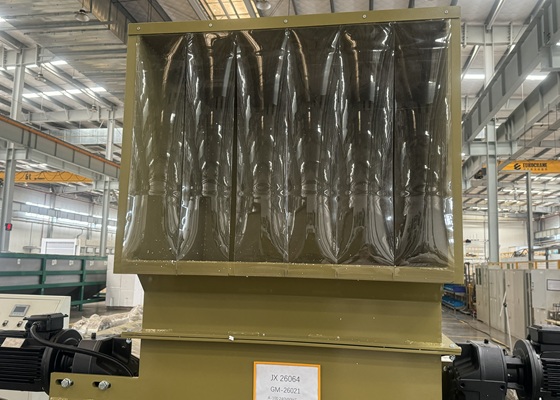
A-C100 Processing Performance and Operational Savings
The A-C100 combines mechanical shredding with screw-driven cold compaction. It does not melt the foam, so the process produces virtually no heat-related odour. With a power rating of 10.75 kW, the machine can process approximately one tonne of EPS in 10 hours. This is sufficient for the company’s weekly volume of insulated boxes and other protective packaging.
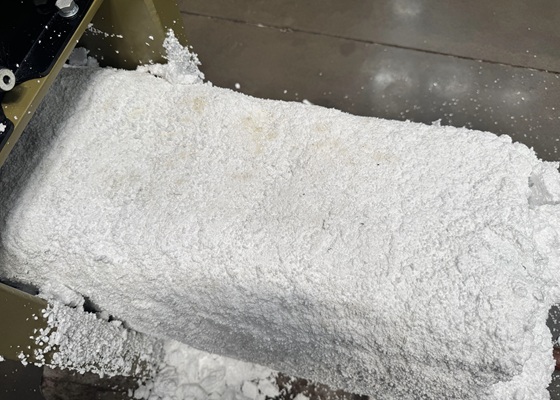
Once fed into the machine, the EPS is broken into smaller pieces by the screw cutting system. The material then enters the compression chamber, where continuous pressure forms it into dense, manageable blocks. Its volume can be reduced by up to 50:1.
The finished blocks are cut into consistent lengths and stored in the recycling area, ready for transport or sale. Their higher density makes handling more economical and allows the material to be supplied to GREENMAX or other downstream recyclers.
Since introducing the EPS compactor, the customer no longer relies on frequent third-party collections and landfill disposal for this waste stream. The change has reduced its waste management expenditure by nearly US$5,000 per month while establishing a more efficient route for recovering laboratory EPS packaging.