
 Select Languange
 English
 Spanish
 Polish
 Japanese
 Italian
 French
How the GREENMAX Z-C200 Improved Foam Packaging Recycling for a Growing Packaging Supplier
Project Snapshot
|
Case location |
Germany |
|
Industry |
Foam packaging and recycling services |
|
Materials |
EPE, EPP, EPS and other foam packaging waste |
|
Equipment |
GREENMAX Z-C200 foam recycling machine |
|
Monthly volume |
Approx. 30 tonnes |
|
Main angle for AU |
Transport distance, labour efficiency and centralised foam packaging recycling |
A business built around local foam packaging recovery
Stephan Schaumstoffe GmbH is a Germany-based foam packaging company serving the local German market, with some customers in Austria and Italy. Because foam packaging is bulky and expensive to move, the company keeps its service area within a practical transport radius to avoid spending too much money on "transporting air".
The business handles EPE, EPP, EPS and other foam packaging waste from end customers in medical, electronics and solar energy applications. For high-volume customers, it offers free waste treatment to secure a stable waste source; for smaller generators, centralised processing is more economical than buying their own foam recycling machine.
The Australian angle: transport distance makes foam recycling a cost issue
For Australian packaging suppliers, manufacturers and recyclers, the main issue is often not whether foam can be recycled, but whether the transport model makes financial sense. Low-density foam fills cages, stillages and trucks quickly, while the actual payload value remains low.
This is why a centralised foam packaging recycling model is relevant to Australia. If one operator can collect mixed packaging foam from multiple customers and process it efficiently with a foam recycling machine, the business case becomes much stronger.
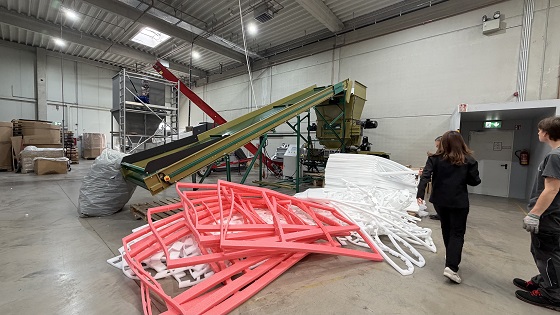
Why GREENMAX Z-C200 was selected
To improve processing efficiency, the customer introduced the GREENMAX Z-C200 foam recycling machine. The goal was to handle mixed EPE, EPP and EPS packaging waste in one daily operation and reduce reliance on manual handling.
After the Z-C200 was put into operation, the customer was able to process around 30 tonnes of foam waste per month. The machine became an important part of its regular foam recycling business.
Labour efficiency: from a multi-worker line to one operator
One of the most important benefits was labour reduction. Previously, the production line might require two shifts with a total of four workers. With the GREENMAX Z-C200, only one worker is needed to operate the entire production line, significantly lowering labour cost and improving overall throughput.
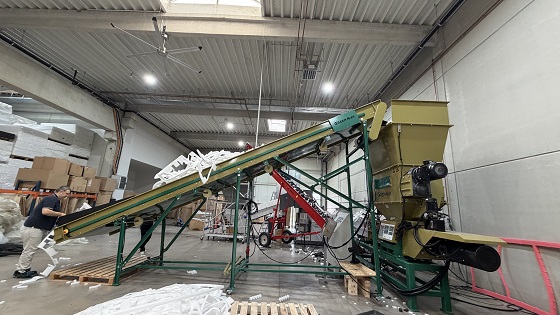
Operational best practice for mixed foam materials
During the customer visit on 8 May 2026, the discussion focused on feeding methods and parameter settings. Because the customer processes many foam types, density, hardness, softness and temperature can vary significantly.
GREENMAX suggested feeding 1-2 pieces at a time and adjusting feeding speed and parameters according to the material. If the equipment runs 8-10 hours per day, this method can generally meet daily production needs while reducing blockage, excessive pressure and abnormal noise.
Why this matters for Australia
Australia is moving packaging toward circular economy principles, including better recovery, reuse, recycling and safe reprocessing. For companies handling bulky packaging foam, a stable foam recycling machine can support this direction by improving the economics of recovery and reducing avoidable waste handling costs.
For Australian medical, electronics, solar and industrial packaging supply chains, the GREENMAX Z-C200 case shows how mixed foam waste can be managed with fewer workers, more stable output and a more scalable service model.
FAQ
What materials did the GREENMAX Z-C200 process in this case?
The machine processed EPE, EPP, EPS and other foam packaging waste generated by customers in medical, electronics and solar-related industries.
How did the foam recycling machine reduce labour cost?
The customer reported that the line previously might need two shifts with four workers in total. After using the GREENMAX Z-C200, one worker could operate the entire production line.
Why is feeding method important when recycling mixed foam?
Different foam materials vary in density, hardness, softness and temperature. Feeding too much material at once can cause blockage, excessive pressure or abnormal noise.
Is centralised foam recycling useful for smaller waste generators?
Yes. For companies with smaller foam waste volumes, sending material to a central foam packaging recycling operator can be more economical than buying their own machine.