
 Select Languange
 English
 Spanish
 Polish
 Japanese
 Italian
 French
Foam Waste in Building Materials: One GREENMAX Compactor for XPS and EPS Offcuts
XPS Offcuts from Sign-Making and Insulation Work
XPS boards are widely used in signage, exhibition displays, building insulation and decorative applications. When sign companies cut large display boards, lettering or models, a considerable amount of offcut material can be left behind. Similar waste is produced when insulation boards are trimmed and fitted on construction sites.
These XPS offcuts are not always easy to manage:
· large boards quickly take up storage space;
· the material is relatively rigid and requires suitable shredding and densification equipment;
· waste may arise at several locations, increasing collection frequency;
· in loose form, the amount of material carried per load is relatively low.
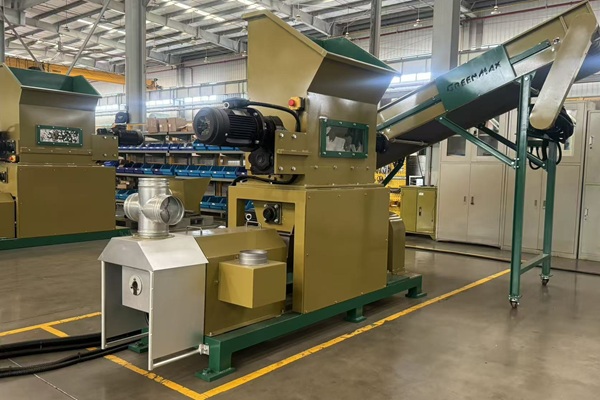
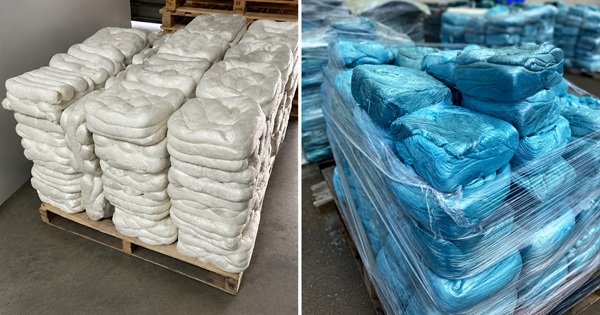
An XPS compactor first reduces the size of the material before melting and extruding it into dense blocks. Once densified, the foam takes up far less space and becomes much easier to store and transport for further recycling.
EPS Offcuts from Interior Fit-Outs
EPS is also commonly used in interior decoration. Decorative mouldings, 3D wall panels, lighting profiles and architectural forms can all leave behind irregular offcuts during production and installation.
For manufacturers of decorative elements, fit-out contractors and architectural model makers, disposing of this material as general waste adds unnecessary handling and collection costs. It also removes recyclable polystyrene from the recovery stream.
With an EPS compactor, loose EPS can be shredded and hot-melt densified into compact blocks. The resulting material is easier to stack, transport and send on for downstream recycling.
When Does a Hot-Melt XPS Compactor Make Sense?
The main difficulty with XPS and EPS is usually not the material itself, but its volume. A relatively small amount by weight can occupy a large section of a warehouse or fill a vehicle before the load becomes commercially worthwhile.
For businesses dealing with larger volumes, or sending material over longer distances, hot-melt densification can be a practical option.
· Volume reduction of up to 90:1: useful where storage space is limited or foam volumes are high.
· More efficient transport: dense blocks allow more material to be moved in each load.
· Suitable for several polystyrene foam streams: both XPS and EPS offcuts can be handled with the same system.
The process is straightforward: the foam is shredded, heated, melted and extruded into dense material. Depending on the waste stream and operating conditions, the volume can be reduced by up to around 90:1.
This is particularly relevant for businesses that regularly generate XPS insulation scraps, sign-board waste or EPS decorative offcuts, where storage and transport can quickly become the larger cost issue.
Can the Same Machine Handle Both XPS and EPS?
Yes. XPS and EPS differ in density and structure, but both are polystyrene-based foam materials and can be recycled through hot-melt densification.
A GREENMAX EPS compactor can be configured to suit the characteristics of each material. XPS boards are shredded before entering the melting section, while EPS decorative waste can also be reduced in size and fed into the same densification process.
This means a recycler receiving insulation board offcuts, signage waste and EPS decoration scraps does not necessarily need separate machines for each stream. One system can be used across several applications, provided the material is suitable for the selected configuration.
A More Practical Route for XPS Foam Recycling
XPS and EPS offcuts from building materials and interior fit-outs still have recycling value. The difficulty is usually getting the material into a form that makes storage, transport and downstream processing worthwhile.
Using a GREENMAX XPS compactor, businesses can reduce bulky foam waste and establish a more workable XPS foam recycling and EPS recovery process.
For sign-makers, insulation contractors, decorative material suppliers and foam recyclers, hot-melt densification offers a practical way to deal with foam offcuts on site and prepare the material for its next stage of recycling.