
 Select Languange
 English
 Spanish
 Polish
 Japanese
 Italian
 French
UK Waste Operator CSG Expands Its Disposal of Expired Hand Sanitiser Capacity with the GREENMAX P-C350
CSG Blackburn is a UK specialist in hazardous and chemical waste management. The materials handled at its facility include hand sanitiser containers that still hold residual liquid. Unlike empty plastic packaging, these containers must be drained before the solid packaging can be compacted, making mechanical dewatering an important stage in the process.
By 2023, increasing volumes had pushed CSG’s existing equipment close to its available capacity. Additional dewatering capability was needed to ease pressure on its disposal of expired hand sanitiser operation. CSG was already familiar with this type of equipment, so the project involved expanding an established process rather than building a new one. Following its assessment, the company selected a GREENMAX P-C350 dewatering machine.
The following video shows the machine operating at the CSG facility:
Why Did CSG Choose the GREENMAX P-C350 When It Already Had a RUNI Machine?
Before installing the GREENMAX P-C350, CSG was already operating a RUNI dewatering machine. Its team therefore understood the performance and day-to-day operating requirements of this equipment. When adding capacity, the decision was based not only on whether the machine could remove residual liquid and compact the packaging, but also on practical performance and overall investment cost.
CSG provided positive feedback after the P-C350 entered service. According to the customer, its processing performance was comparable to European equipment, while offering strong value for money. This assessment is particularly useful because it comes from a professional waste operator with previous experience of dewatering machinery.
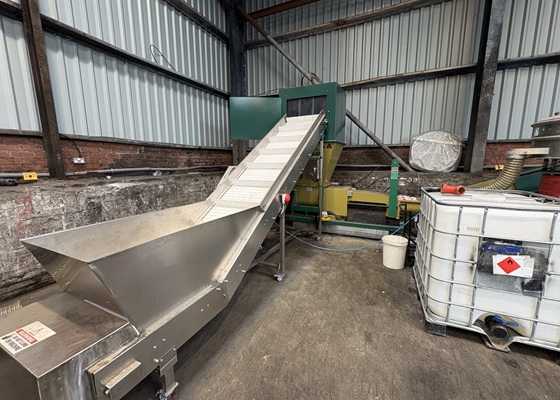
How Does the GREENMAX P-C350 Process Hand Sanitiser Containers?
Most of the hand sanitiser bottles arriving at CSG still contain some liquid. Before the packaging can move into the downstream recovery process, the liquid and container must be separated. As volumes increase, manually opening loads and emptying bottles one by one becomes slow and labour-intensive.
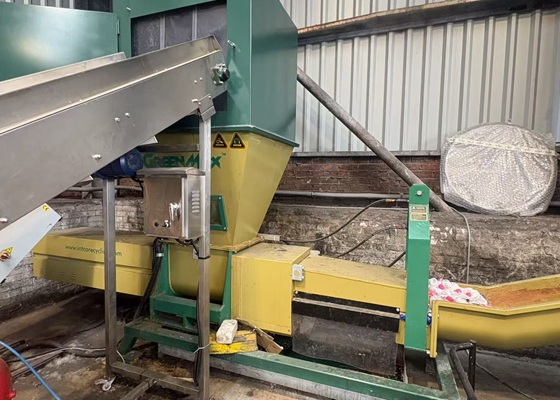
The GREENMAX P-C350 beverage dewatering machine combines liquid removal and compaction in a single process. As containers pass through the machine, residual liquid is squeezed out and directed into a collection tray, then transferred through pipework to a designated tank. The solid packaging is compacted at the same time and can subsequently enter the customer’s existing HDPE bottle recycling process.
For a specialist operator such as CSG, the P-C350 acts as a front-end mechanical pre-treatment unit. It increases the processing rate of liquid-containing packaging while reducing manual handling. A volume reduction of approximately 10:1 also helps lower downstream storage and transport requirements. In a separate test using out-of-date bottled water, this PET bottle dewatering machine achieved a verified liquid removal rate of nearly 90%.
Local UK Installation and After-Sales Support
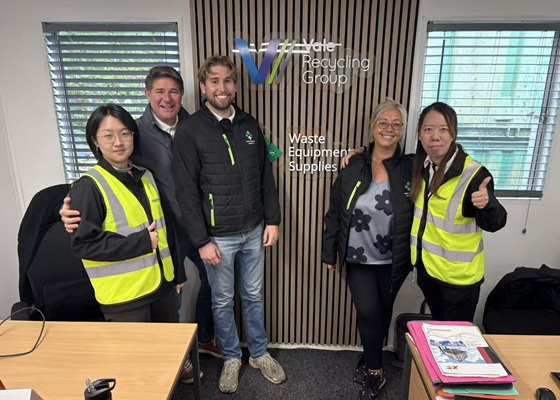
The GREENMAX P-C350 at CSG Blackburn was installed by GREENMAX’s UK partner, Waste Equipment Supplies, which also provides local after-sales support. At an established waste facility, adding a dewatering machine involves more than equipment delivery. Available space, feeding arrangements, liquid collection and the discharge route for compacted packaging must all be coordinated so the machine can integrate with the existing HDPE bottle recycling process.
The local team completed the installation around CSG’s site conditions and continues to provide technical support. CSG also gave positive feedback on the installation and service delivered by the GREENMAX UK team. For waste operators investing in industrial recycling equipment, dependable local support can be just as important as machine performance.
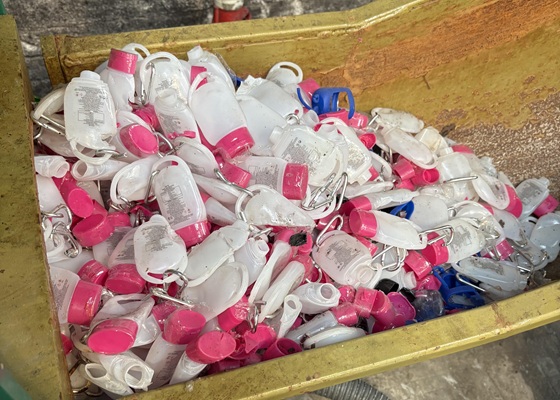
Disposal of Expired Hand Sanitiser: Drain First, Then Treat It Through the Correct Waste Route
Some hand sanitiser stocks produced or accumulated during the pandemic have now passed their expiry dates. Alcohol-based products may be classified as Class 3 flammable liquids under the Australian Dangerous Goods Code, depending on their formulation, flash point and packaging. Their SDS and the requirements of the relevant state or territory regulator should therefore be checked before storage, transport or disposal. These liquids should not be discharged into drains or mixed with general waste.
In Australia, expired hand sanitiser and contaminated packaging should be sent to a waste facility licensed to accept the relevant material. Waste levies may also apply to landfill disposal in regulated areas; for example, the NSW Metropolitan Levy Area rate is A$180.20 per tonne for 2026–27.
Sending full containers directly for thermal treatment can also mean losing plastic that may still have recycling value. A more practical route is to use a dewatering machine to separate the liquid from the packaging. The recovered liquid can then enter an authorised hazardous-waste treatment stream, while emptied bottles—after metal attachments are removed and the polymer is confirmed—can proceed to an appropriate HDPE bottle recycling process.
When Is Additional Dewatering Capacity Needed?
The CSG project illustrates a common operational issue. Existing equipment may still be running normally, yet growing waste volumes can gradually turn dewatering into the bottleneck. The key question is not necessarily whether the original machine should be replaced, but whether additional capacity will resolve the accumulation.
If operating hours continue to increase and liquid-containing packaging begins to queue while sorting, liquid storage and downstream treatment still have spare capacity, adding another dewatering machine can directly increase throughput. If the real constraint lies in liquid storage or downstream treatment, however, another machine alone will not improve the overall process.
Useful indicators include daily packaging volumes, container types, residual liquid levels, machine operating hours and the point at which materials begin to accumulate. This was the situation at CSG Blackburn in 2023. The company kept its existing equipment and added a GREENMAX P-C350 to share the growing disposal of expired hand sanitiser workload.
For Australian waste operators that already use dewatering equipment, as well as businesses managing concentrated stocks of expired beverages or hand sanitiser, the case offers a practical approach: identify the actual bottleneck first, then add dewatering capacity where it will improve the wider process.