 Select Languange
 English
 Spanish
 Polish
 Japanese
 Italian
 French
GREENMAX P-C900 PET Bottle Dewatering Machine: Nearly 90% Liquid Removal Verified in a Site Test
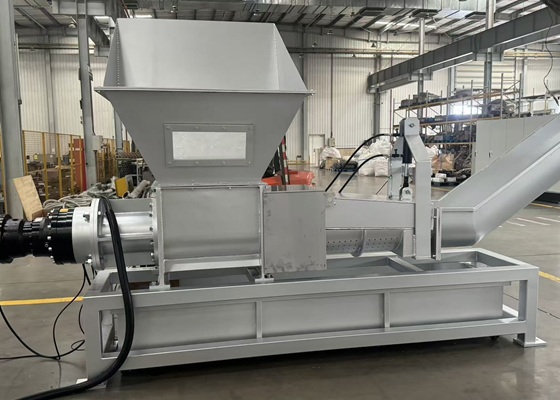
The new GREENMAX Poseidon P-C900 PET bottle dewatering machine is designed for discarded packaging that still contains liquid. Along with standard bottled water and beverage containers, it can process larger bottles used for household cleaning and personal care products.
The Poseidon beverage dewatering machine range includes the P-C200, P-C350 and P-C900, allowing equipment to be selected according to the required hourly throughput. For Australian beverage producers, retail distribution centres and recycling operators, this provides a practical way to bring different sizes of filled containers into one disposal of out of date beverages process, reducing the need to open and empty each bottle by hand.
From Small Beverage Bottles to Larger Containers
Australia consumes large volumes of bottled water, soft drinks and juice. Off-spec production batches, labelling errors, expired stock, damaged shipments and retail returns can all leave businesses with bottles that still contain liquid. If these containers are baled without being emptied, the liquid adds unnecessary weight. Leakage from sugary drinks or organic residues may also cause odours, pests and contamination around the storage area, affecting the quality of subsequent PET bottle recycling.
The P-C900 has a larger feed opening, increased compression space and a larger screw, allowing it to accept both standard beverage bottles and larger detergent or shampoo containers. Bottles do not need to be opened individually. During processing, the screw compresses the packaging, releases the contents and directs the liquid into the collection system. The reduced containers are then easier to sort, bale and transport.
Site Test with 24 Full Water Bottles
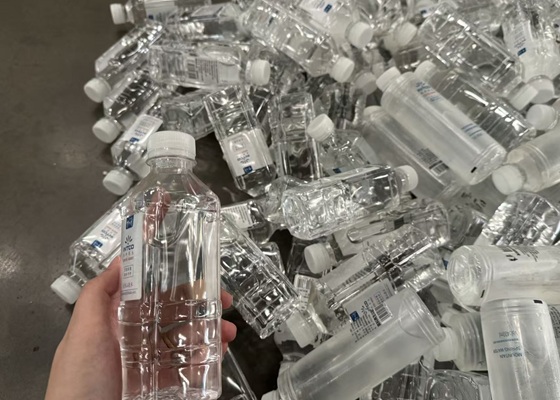
To verify the liquid removal performance of the P-C900 dewatering machine, GREENMAX conducted an on-site trial using several cartons of out-of-date bottled water. Each carton contained 24 bottles of 380 ml. After processing, 24 compressed bottles were randomly selected and the remaining liquid was measured.
· Liquid weight before processing: 9,120 g
· Liquid remaining after processing: 980 g
· Liquid removed: 9,120 − 980 = 8,140 g
· Liquid removal rate: 8,140 ÷ 9,120 × 100% ≈ 89.25%
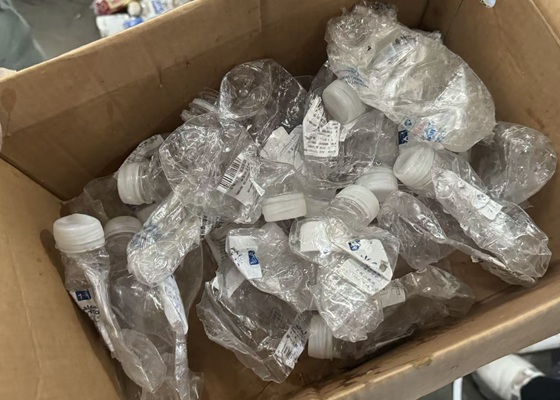
The test recorded a liquid removal rate close to 90%, substantially reducing the amount of water carried into the baling and transport stages. Most of the bottles were also flattened during processing, achieving a volume reduction of approximately 10:1 and improving storage and container-loading efficiency.
This result was measured using bottled water as a single, consistent feedstock. Soft drinks, yoghurt cups, shampoo bottles and other liquid-filled packaging may perform differently depending on the liquid viscosity, bottle material and closure design. GREENMAX can conduct a material trial to demonstrate the actual processing result for your packaging.
Would you like to test your liquid-filled packaging?
Contact GREENMAX to discuss your bottle sizes, liquid types and daily processing volume:
WhatsApp: +1 773 482 3129
Continuous Feeding, Draining and Compaction
During operation, liquid-filled bottles are delivered to the P-C900 through an automatic feeding system. The machine continuously compresses the containers and separates the liquid from the packaging. Waste liquid flows into the collection system, while the flattened bottles leave through the discharge end for sorting, baling or transfer to a washing line.
Compared with manual emptying, this continuous process reduces direct contact between workers and waste liquids while improving throughput. Businesses planning a beverage packaging recycling operation should consider more than hourly capacity. Bottle dimensions, cap design, liquid viscosity and the intended downstream process all affect equipment configuration.
Water, sugary drinks, dairy beverages and detergents require different handling arrangements. The P-C900 is therefore fitted with a large collection tray capable of holding several hundred litres. Drainage pipes can direct the recovered liquid to a designated tank or treatment area, helping keep the recycling floor organised.
Where Can the P-C900 Be Used?
The P-C900 PET bottle dewatering machine is suitable for beverage filling plants, bottled water producers, supermarkets, distribution centres, product-return facilities, waste management companies and PET recycling or baling operations.
In Australia, placing the draining stage before baling and washing can reduce unnecessary transport weight, limit leakage and provide more consistent material for downstream PET processing. It is particularly useful where mixed bottle sizes or recurring volumes of rejected and out-of-date products need to be handled efficiently.
GREENMAX can arrange a test based on the customer’s bottle type, liquid contents, daily volume and site layout. Feeding equipment, liquid collection and downstream baling arrangements can then be configured around the actual requirements of the project.