 Select Languange
 English
 Spanish
 Polish
 Japanese
 Italian
 French
EPS recycling in Australia: picking the right EPS compactor or EPS hot melting machine for your site
Why EPS recycling suddenly feels “urgent” in Australia
If you run warehousing, distribution, cold chain, appliances/electronics, or construction insulation, EPS is everywhere—and it’s starting to behave like a cost problem and a compliance risk.
Here’s what the latest Australian signals say:
Waste volumes are still huge. Australia generated 75.6 million tonnes of waste in 2022–23, with a national resource recovery rate of 66% (63% recycling/re-use component noted on the same page).
Plastic recovery is struggling. A 2025 report on new government data said Australians generated 3.2 million tonnes of plastic waste in 2023–24, with recovery around 14.1%.
Kerbside is not your EPS solution. Australia’s Recycle Mate guidance says #6 EPS foam should never go in kerbside recycling bins because it breaks apart and causes litter/contamination.
So businesses are landing on the same practical conclusion: you don’t “fix EPS” with good intentions—you fix it by removing air (volume) on-site and making collection/transport viable.
That’s where an EPS recycling machine (typically an EPS compactor or EPS hot melting machine) earns its keep.
What changed recently: policy + packaging pressure (the part your procurement team cares about)
Western Australia (WA): Stage 2 rules are active, and the page was updated this month
WA’s “Plan for Plastics” page states Stage 1 and 2 regulations are active, with Stage 2 bans phased in on a staggered schedule (page last updated 20 Feb 2026).
WA’s Stage 2 ban plan for moulded EPS/foamed plastic packaging notes enforcement begins 1 July 2025.
South Australia (SA): EPS cups & bowls ban already commenced
SA’s official 2025 bans guide states bans commenced on 1 September 2025, including expanded polystyrene (EPS) cup and bowl packaging.
NSW: Plastics Plan 2.0 is the direction of travel
NSW EPA’s Plastics Plan 2.0 page (updated 09 Nov 2025) sets out the next steps to reduce plastic waste in the environment and landfill.
Industry coverage highlights the plan’s phased approach and explicitly warns that Greater Sydney could run out of landfill space by 2030 without action.
Federal: packaging regulation reform is moving (and it’s recent)
The federal environment department’s packaging reform page (published two weeks ago) describes reforms to ensure packaging is designed for circularity: recovered, reused, recycled, reprocessed safely.
Plain-English takeaway: Even if your EPS isn’t “banned” in your use case today, Australia is clearly tightening expectations around problematic plastics and landfill reliance. The easiest win is operational: capture EPS cleanly and densify it before it becomes a logistics nightmare.
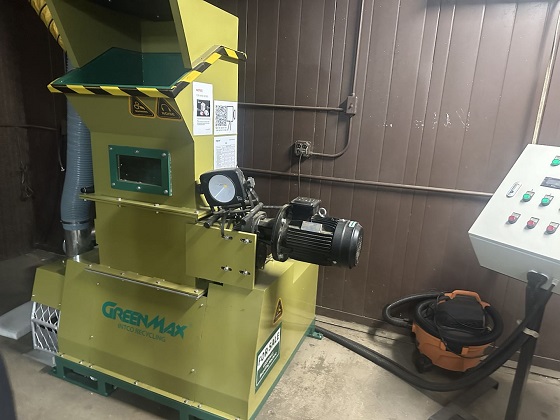
EPS compactor vs EPS hot melting machine: how to choose without overthinking it
You’re not choosing a buzzword. You’re choosing output form + site constraints.
Choose an EPS compactor when…
Typical fit: distribution centres, importers, 3PLs, electronics/appliance warehouses.Your EPS is mostly clean protective packaging (appliances, electronics, furniture, parts).
You want lower operating complexity (no heating zone to manage).
You prefer compressed blocks/logs that are easy to stack, bale, and backhaul.
Choose an EPS hot melting machine when…
You need the highest densification to minimise pickups and transport cost.
You have stable volumes and can manage ventilation + operating procedures.
You want a dense ingot/brick form that stores in less space and ships efficiently.
Typical fit: high-throughput DCs, cold-chain hubs, manufacturing sites with consistent EPS waste.
When you need a broader EPS recycling machine setup
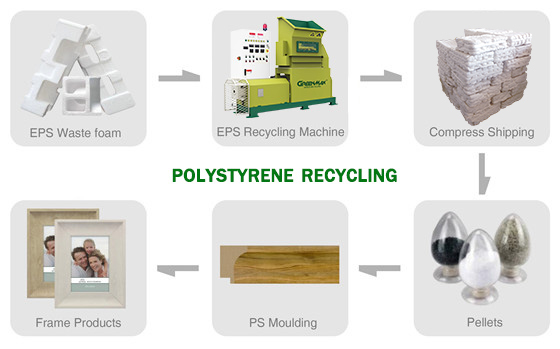
For many sites, the best performance comes from a simple “system”:
1. Pre-break (cut/shred bulky pieces for smoother feeding)
2. Densify (compactor or hot melting machine)
3. Store + dispatch (clean area + clear labeling + scheduled pickups)
This aligns with the kerbside reality: EPS needs controlled handling to avoid fragmentation and contamination.
The 6 on-site details Australian businesses often miss (and pay for later)
1. Contamination discipline
Tape, labels, food residue, mixed plastics—these drag down recyclability and buyer interest fast.
2. Where your labour actually goes
If staff spend time “breaking EPS by hand,” you’re leaking money daily. Add pre-processing and consistent collection points.
3. Space is a cost centre
EPS stores badly. Densification gives you space back—often the first visible ROI.
4. Pickup frequency vs transport distance
Australia’s distances punish low-density loads. The whole point is to stop shipping air.
5. Audit trail
Plastics Plan messaging is moving toward measurable outcomes and reduced landfill reliance. Keep monthly records: kg densified, dispatch dates, recycler details.
6. State-by-state differences
If you ship nationally, design your internal standard to match the strictest state signals (WA/SA are moving faster on EPS-related items).
FAQ —— EPS recycling in Australia
Is EPS accepted in kerbside recycling in Australia?
Generally no. Recycle Mate explicitly advises that #6 EPS foam should not be placed in kerbside recycling bins due to breakage, litter, and contamination issues.
What’s the difference between an EPS compactor and an EPS hot melting machine?
An EPS compactor compresses EPS cold into dense blocks/logs. An EPS hot melting machine densifies via heat into an even denser form, typically reducing storage space and transport frequency further—at the cost of higher operating requirements (procedures, ventilation).
Why invest in an EPS recycling machine now?
Australia’s recent data and policy direction point to higher scrutiny on plastics and landfill reliance, plus state-level action on problematic plastics. Operationally, on-site densification is the fastest way to control cost and demonstrate responsible handling.
Which industries benefit most from EPS recycling?
Appliance/electronics distribution, 3PL warehouses, cold chain, manufacturing, and construction supply—anywhere EPS is used for protection or insulation and volumes are consistent.