
 Select Languange
 English
 Spanish
 Polish
 Japanese
 Italian
 French
How an EPS melting compactor solves the offcut problem for Australian prefabricators
In Australian construction, EPS stopped being just insulation long ago. On the structural side sit waffle pods — the slab-lightening modules that form a large share of residential rafts in Victoria and Queensland — along with void formers and insulation boards. Decorative cornices and commercial insulation systems use it too. Among prefabricators, it is one of the most-worked materials in the plant.
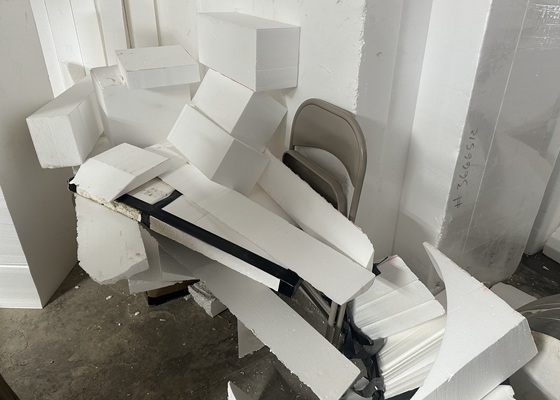
Hot-wire cutting and CNC routing deliver precise components. They also deliver offcuts, every day of the week — clean, dry, plainly recyclable, yet at most factories still without a dependable route into EPS recycling Australia.
Light weight and bulk make collection, storage and transport expensive. After shredding and compaction, density lifts from 20–25 kg/m³ into the hundreds, and one truck loads what a dozen used to carry. For cutters and prefabricators, densifying on site is what makes the rest of the recycling chain affordable.
The demand for recycled EPS already exists
Landfill levies do most of the talking. In 2026–27 the NSW levy sits at $180.20 per tonne, Victoria's at $177.19 and Queensland's at $135 — and construction and demolition waste is squarely in every state's sights. The federal National Waste Policy sets the direction: an 80 per cent average resource recovery rate by 2030.
In commercial construction, GBCA's Green Star rating already credits the use of recycled material, and the requirement travels — from developers down the supply chain to component suppliers. The next commercial tender you price may well ask about it.
A loop exists already, though not from scratch: some waffle pod suppliers run take-back programs for major customers, with recovered EPS shredded back into new products. Coverage, however, favours the capitals and the big accounts. Most small and mid-sized cutters sit outside it. The market wants recycled material; what it lacks is clean, compacted EPS delivered in consistent volumes.
How to recycle EPS offcuts: three pressures on Australian fabricators
Compliance. State EPA waste-tracking rules differ in detail but generally mean producer registration, transfer documents, licensed carriers and records kept on file. Every pickup brings its paperwork; frequent pickups bring a lot of it.
Distance. Recycling capacity is concentrated in the capitals and a handful of hubs, while cutting and prefabrication businesses sit on city fringes and in regional industrial estates. Small volumes miss the pickup threshold; hauling them yourself costs more than the material is worth. In Australia that is not a figure of speech — it is hours behind the wheel.
The yard. Loose offcuts fill it within days, and a gust of wind scatters white foam across the site and beyond. EPS is combustible; storing it loose raises the fire load, draws insurance scrutiny and sits squarely within WHS risk-assessment obligations. Every week the pile waits, the space and supervision it consumes are paid for out of production costs.
Compact on site: shrink the recycling radius to the workshop
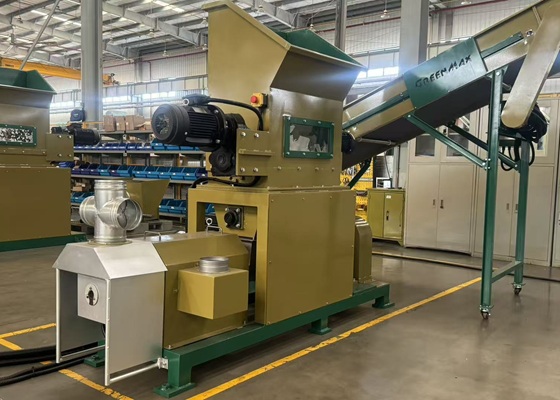
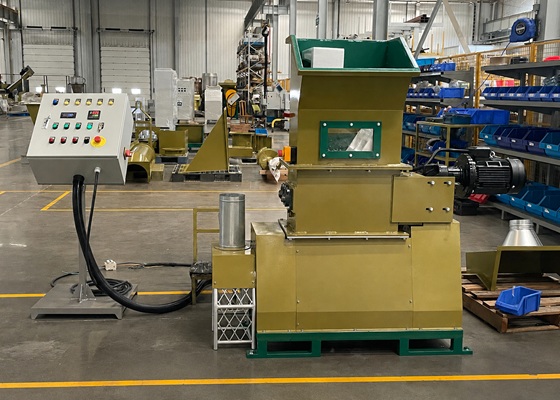
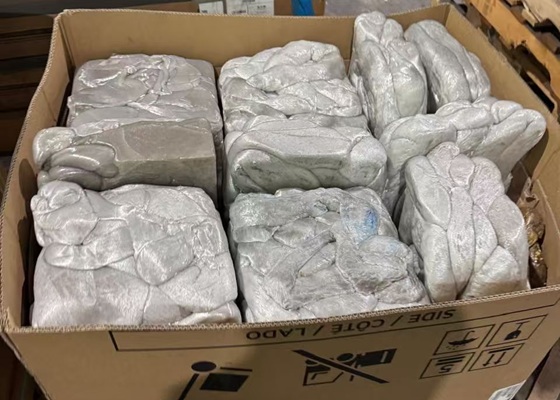
The three pressures share one answer. Instead of waiting for a recycler to come to you, install an EPS melting compactor in the plant and densify offcuts the day they are created. In practical terms, this is how to recycle EPS offcuts: sort at the source, feed the machine, and reduce the volume where the waste is born. Shredding, hot melting and screw compaction form dense, stackable blocks at a volume reduction of roughly 90:1.
After compaction, the foam that filled cages and corners of the warehouse becomes blocks you can stack, weigh and load. Each truck carries far more, pickup intervals stretch out, and the transfer documents and loading schedules shrink with them. Recyclers, for their part, can finally judge weight, purity and batch size at a glance.
For compaction to genuinely improve EPS recycling in Australia, sorting up front matters as much as the machine. White EPS, graphite EPS and offcuts carrying cement, adhesive or metal inserts should be managed separately — and clean production offcuts never mixed with demolition-site material. The steadier the purity, the more easily the blocks flow on into granulation and new products.
Choosing a model: match it to your monthly offcut volume
An EPS melting compactor is not bought by size but by fit: the offcuts your plant generates, the rhythm of production, the floor space you can spare.
The mini suits plants producing 1–2 tonnes a month. Typically small cutters focused on decorative components, dealing with offcuts in one weekly session. At roughly 50 kg/h and with a compact footprint, it needs little more than a strip of wall space — no major refit of the workshop.
The standard model answers 3–5 tonnes a month, the usual range for structural prefabricators. At 100 kg/h, a tonne of EPS takes about ten hours — an extended single shift, or two shorter ones.
Above 5 tonnes a month, start from the 200 kg/h model — a tonne in about five hours, for when offcuts arrive in surges. At that scale the bottleneck is rarely the machine; it is the distance offcuts travel from the cutting area. Placing the compactor beside the main line and planning the feed and block-handling route in advance saves more labour than any step up in capacity.