
 Select Languange
 English
 Spanish
 Polish
 Japanese
 Italian
 French
How Can Sydney’s Solar Industry Handle EPS and EPE Packaging with One Foam Recycling Machine?
Australia’s rooftop solar market continues to grow rapidly. According to the Clean Energy Regulator (CER), more than 1 GW of small-scale solar capacity was installed in the second quarter of 2026, setting a new quarterly record.
New South Wales is one of the country’s most established solar markets, with more than one million homes and businesses already using rooftop solar. As more solar panels move through warehouses, distributors and installation sites across Sydney, the volume of EPS and EPE protective packaging is also increasing.
These foams are lightweight but bulky, so they can quickly take up valuable warehouse space. For solar businesses looking at polyethylene recycling Sydney solutions, installing separate foam recycling machine systems for EPS and EPE is not always the most practical approach.
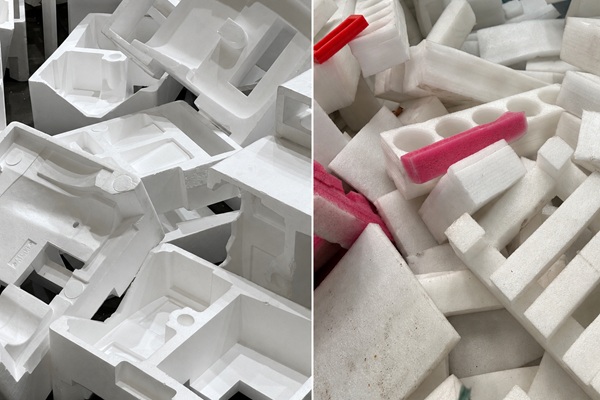
One MARS Machine for Both EPS and EPE
The GREENMAX MARS EPE foam compactor can process both EPS and EPE packaging waste. The foam is first crushed, then fed into the thermal densification system, where it is heated and extruded into dense blocks. The volume can be reduced by approximately 90:1.
For solar panel distributors, warehouse operators and large installation companies, this means loose packaging foam can be reduced directly on site. Less space is needed for storage, while the densified material is easier to handle, transport and send to the next recycling stage.
The MARS series has a compact footprint and can be installed in a corner of a warehouse. When processing EPS and EPE separately, there is no need to change machines. The operator simply selects the corresponding processing mode on the control panel when switching materials.
Before delivery, GREENMAX can test the customer’s own EPS and EPE waste, confirm suitable operating parameters and save them into the system. This helps reduce repeated adjustment after installation and makes daily operation more straightforward.
For businesses exploring polyethylene recycling Sydney, MARS offers a more flexible option when both EPE and EPS packaging are generated on site. One machine can handle both materials without requiring two separate volume-reduction systems.
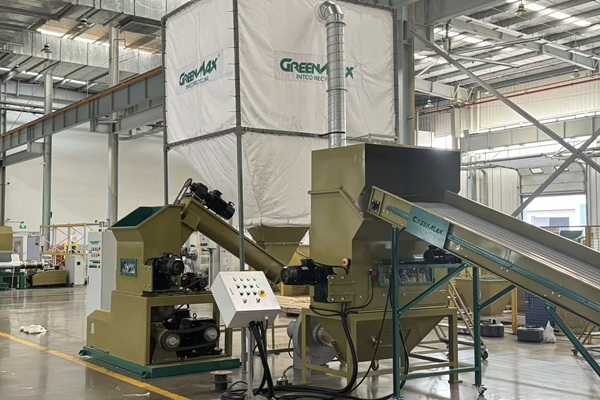
A More Automated System for EPS and EPE Packaging
For sites generating larger volumes of foam, GREENMAX can also configure one MARS machine with two feeding lines to increase automation for both EPE foam recycling and EPS recycling. This arrangement has already been used in an actual project, allowing the two materials to be handled separately while sharing the same downstream thermal densification unit.
The two foam types are collected separately at the front end and then fed into different processing lines:
Line 1: Feeding → Separate crushing → Silo storage → MARS thermal densification
Line 2: Feeding → MARS crushing and thermal densification → Extrusion into blocks
Both lines can operate at the same time. Material from Line 1 is crushed independently and stored temporarily in the silo before entering the MARS system. Material from Line 2 goes directly through the MARS foam recycling machine for crushing, melting and extrusion.
The customer can decide which line is used for EPS and which for EPE, depending on the site layout and daily material flow. When changing materials, the operator only needs to switch to the corresponding processing mode.
For warehouses that regularly unpack solar panels and related equipment, this setup reduces manual handling and foam accumulation while allowing one system to manage two low-density packaging materials.
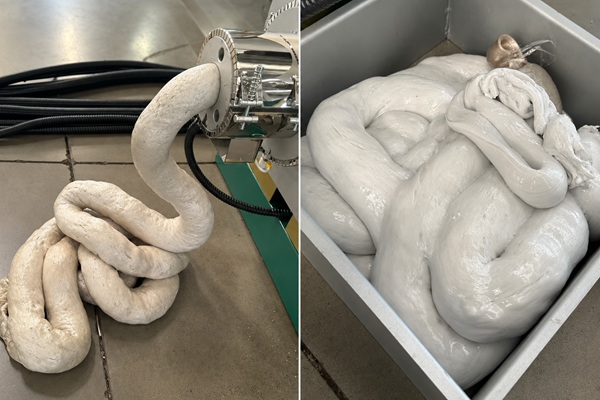
How to Operate the MARS System
Daily operation is relatively straightforward and can be divided into three steps:
1. Sort and feed the material. Separate EPS and EPE from cardboard, tape, metal and other contaminants. Then feed the foam into the appropriate processing line.
2. Select the processing mode and start the machine. The operator chooses the corresponding EPS or EPE mode. Once the system is running, the foam is crushed and transferred into the melting section for continuous processing.
3. Collect and stack the densified material. The melted foam is extruded from the discharge end and forms dense blocks after cooling. These can then be collected and stored together.
This EPE foam compactor uses a three-stage independent heating system. If the temperature needs to be adjusted, each heating zone can be controlled directly through the three temperature-control buttons, making operation simple and clear.
After basic training, one operator can manage feeding, mode selection, routine checks and discharge handling.
If you would like to learn more, contact us via WhatsApp: +86 173 1885 2067
Below are the specifications of the standard GREENMAX MARS M-C200 model for reference:
| Specification | M-C200 |
| Total Power Consumption | 37.5 kW / 53.2 hp |
| Volume Reduction Ratio | 90:1 |
| Processing Capacity | Up to 200 kg/h / 440 lbs/h |
| Density of Densified Material | 600–800 kg/m³ / 1,011–1,348 lbs/cu yd |
| Feed Hopper Opening | 960 × 532 mm / 38 × 21 in (L × W) |
| Weight | 2,500 kg / 5,500 lbs |
When Does a Sydney Solar Business Need a Foam Recycling Machine?
The key question is not how many solar panels a company installs, but how much EPS and EPE packaging waste it actually generates each day.
If loose foam quickly fills the warehouse, requires frequent collection or starts interfering with normal storage operations, a MARS system may be worth considering. For businesses looking for a practical polyethylene recycling Sydney solution, on-site densification can also reduce the need to repeatedly move and collect bulky loose foam.
GREENMAX can test the actual EPS and EPE materials generated by solar businesses in Sydney and across NSW, then recommend a suitable MARS model and feeding configuration based on daily volume and available floor space.
If both EPS and EPE are generated on a regular basis, using one machine for both materials is often simpler than building two completely separate recycling processes.
Below is an actual operating video showing a MARS machine working with two feeding lines, so you can see the processing flow and densification result directly: