 Select Languange
 English
 Spanish
 Polish
 Japanese
 Italian
 French
Electric Battery Packaging Recycling in Australia's Solar Industry: Foam Waste Challenges and GREENMAX Solutions
Australia's solar industry is moving from a panel-led market into a solar-plus-storage market. Rooftop solar continues to expand, home and commercial batteries are being installed faster, and battery storage is now treated as a practical tool for lowering peak demand, improving energy resilience and making better use of daytime solar generation. This growth is good news for the clean energy transition, but it also creates a new operational issue for solar battery suppliers, installers and distribution warehouses: electric battery packaging waste.
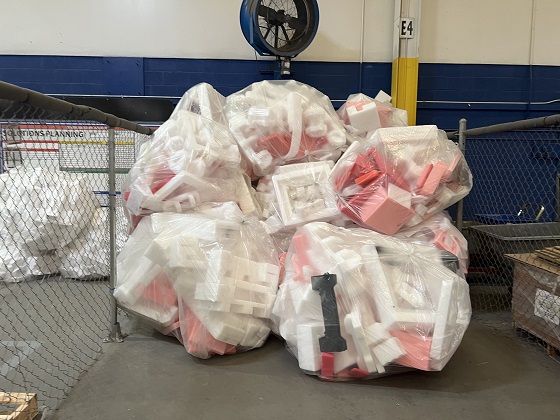
Every solar electric battery, battery cabinet, inverter-battery system and energy storage module needs protection during long-distance transport. Heavy battery products cannot be packed like ordinary consumer goods. They require rigid and flexible protective materials such as EPS foam, EPE foam, PE foam corner blocks, moulded inserts, cardboard and plastic film. Once the battery systems are unpacked, the packaging quickly becomes bulky waste that takes up warehouse space and increases disposal costs.
For companies in the Australian solar supply chain, dealing with foam packaging is no longer a small back-of-house issue. As battery adoption accelerates, foam packaging recycling can become part of a cleaner, more cost-effective and more compliant solar logistics strategy. GREENMAX provides foam compaction and densification solutions that help solar battery companies reduce the volume of EPS and EPE packaging, prepare recyclable material for collection, and turn a difficult waste stream into a manageable resource.
Australia Solar and Electric Battery Industry Trends
1. Rooftop solar remains a national energy strength
Australia already has one of the world's strongest rooftop solar markets. In the second half of 2025, rooftop solar PV reached 28.3 GW of installed capacity and contributed 14.2% of Australia's electricity generation. This means more homes and businesses are producing daytime solar power and are looking for better ways to use, store and manage that energy.
2. Solar batteries are moving into the mainstream
Battery storage is no longer only an early-adopter product. The Clean Energy Council reported that 183,245 batteries were sold in Australia in the second half of 2025 alone, more than the previous four years combined. This rapid uptake is changing procurement, warehousing and installation patterns across the solar industry. More battery units moving through the supply chain also means more protective foam packaging arriving at warehouses, showrooms and installation sites.
3. Solar-plus-storage is becoming a policy-supported market
Government programmes and market design are encouraging batteries to store low-cost solar generation during the day and discharge energy when the grid needs it most. This supports households and small businesses, but it also increases the number of heavy, high-value electric battery products that need safe packaging, careful handling and organised waste recovery after unpacking.
4. Battery manufacturing and supply chain resilience are strategic priorities
Australia's National Battery Strategy positions batteries as part of the Future Made in Australia agenda. The strategy focuses on strengthening domestic battery capabilities, building skills, improving supply chain security and supporting Australia's role in global battery value chains. As the battery economy grows, packaging waste management will become a practical sustainability issue for manufacturers, importers, distributors and installation networks.
Government Policy Signals Behind Battery Growth
Several policy settings are supporting the growth of solar batteries and electric battery storage in Australia. These policies do not only affect energy users; they also influence the volume of battery products moving through the market and the amount of foam packaging that must be handled after delivery.
Cheaper Home Batteries Program: The Australian Government's Cheaper Home Batteries Program provides around a 30% discount on eligible small-scale battery systems connected to new or existing solar PV. The DCCEEW programme information states that eligible systems are generally in the 5 kWh to 100 kWh range, and the discount is based on usable battery capacity and small-scale technology certificates under the SRES.
Small-scale Renewable Energy Scheme (SRES): The SRES supports households and small businesses that install eligible small-scale renewable energy systems. With solar batteries included in the scheme framework, retailers and installers have a stronger commercial reason to promote battery adoption alongside rooftop PV.
Capacity Investment Scheme (CIS): The CIS is designed to accelerate investment in renewable generation, such as solar, and clean dispatchable capacity, such as battery storage. It aims to reduce investment risk and help Australia move towards its renewable electricity target.
National Battery Strategy: The National Battery Strategy supports the development of a diverse and competitive Australian battery industry, with a long-term vision for local battery materials, manufacturing capability, energy security and participation in global supply chains.
Battery stewardship and safety awareness: Battery products themselves must be handled separately through appropriate stewardship and recycling channels. Packaging foam is a different waste stream, but the growth of battery stewardship highlights the same direction: solar and battery companies are under increasing pressure to show responsible end-of-life management across both products and packaging.
Why Foam Packaging Is Generated in the Solar Electric Battery Supply Chain
Shock absorption: Battery modules and cabinets are heavy and sensitive. EPS, EPE and PE foam protect products against vibration, drop impact and edge damage during shipping.
Long-distance logistics: Many battery systems move through international shipping, ports, domestic transport, regional warehouses and installation vehicles. Protective inserts help keep the product stable across multiple handling stages.
High product value: Solar batteries are expensive, safety-critical products. Damage during transport can lead to warranty claims, delayed projects and customer dissatisfaction, so suppliers use generous protective packaging.
Mixed product formats: The solar battery market includes home batteries, modular systems, wall-mounted units, floor-standing cabinets and commercial storage components. Different shapes require customised foam inserts, corner blocks and pads.
Installer unpacking patterns: Batteries are often unpacked at warehouses or project sites. When multiple units are installed, foam waste is generated in a concentrated way, creating immediate pressure on space and waste collection.
Pain Points for Solar Battery Companies in Australia
Bulky material with low weight: EPS and EPE foam take up a lot of space but weigh very little. This makes loose foam expensive to store, transport and collect.
High skip bin and transport costs: Because loose foam fills bins quickly, companies may pay for frequent collections while shipping mostly air.
Limited council recycling options: Expanded polystyrene is generally not accepted in regular council recycling services in Australia, and larger industrial quantities usually require dedicated recycling arrangements.
Warehouse safety and housekeeping pressure: Loose packaging foam can block aisles, reduce working space and create a poor impression in distribution or installation facilities.
Contamination risk: Foam mixed with cardboard, tape, labels, strapping, soil or general rubbish is harder to recycle. Without sorting at source, recyclable material may be sent to landfill.
ESG and customer expectations: Solar companies sell clean energy products, so customers and business partners increasingly expect packaging waste to be managed responsibly.
Different foam types: Rigid EPS foam and flexible EPE or PE foam may require different recycling equipment settings or handling methods. A single waste plan must identify the material type correctly.
GREENMAX Foam Recycling Solution for Solar Battery Packaging
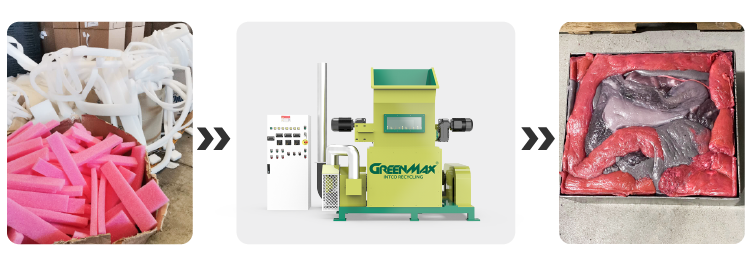
GREENMAX helps businesses reduce the cost and complexity of foam packaging waste by compacting or densifying bulky foam into dense blocks or ingots. For solar battery distributors, warehouses and installation companies, this creates a cleaner and more efficient recycling workflow.
How the GREENMAX Process Works
1. Separate foam at source: Keep EPS, EPE and PE foam clean and separate from cardboard, tape, strapping, general rubbish and battery waste.
2. Feed foam into the machine: Operators feed loose packaging foam into a GREENMAX compactor or densifier. The machine reduces the air volume inside the foam structure.
3. Create dense blocks or ingots: The compacted material is easier to palletise, store and transport than loose foam.
4. Arrange recycling collection: Dense foam blocks can be handled by suitable recycling partners or downstream manufacturers, depending on material type and local market conditions.
5. Track results: Businesses can record reduced skip bin use, recovered foam volume, logistics savings and landfill diversion for internal sustainability reporting.
Business Benefits for the Australian Solar Battery Sector
Reduce the volume of loose foam packaging before it leaves the site.
Lower the frequency of waste collections and reduce skip bin pressure.
Improve warehouse cleanliness and free up valuable storage space.
Make EPS and EPE foam easier to transport to recyclers.
Support ESG claims with a visible packaging waste reduction process.
Create a more professional recycling workflow for solar battery distribution and installation operations.
Align the clean energy product story with cleaner packaging management.
Recommended Waste Management Plan for Solar Battery Packaging
A practical packaging recycling plan should be simple enough for warehouse teams to follow every day. The following approach is suitable for solar battery importers, distributors, installers and logistics operators:
1. Identify the main foam types generated by the business: EPS, EPE, PE foam or a combination.
2. Create separate collection cages or bags for clean foam packaging only.
3. Remove cardboard, labels, timber, metal strapping, plastic film and contaminated materials before compaction.
4. Match the correct GREENMAX compactor or densifier to the foam type and daily waste volume.
5. Place the machine close to the unpacking area to avoid unnecessary internal handling.
6. Palletise compacted blocks or ingots and arrange periodic collection with a suitable recycling partner.
7. Monitor before-and-after data, including bin pickups, storage space and recovered foam volume.
Conclusion: Solar Growth Needs Smarter Packaging Recycling
Australia's solar and electric battery market is entering a new phase. Solar panels remain important, but batteries are becoming central to how households, businesses and the grid use renewable energy. With this shift comes a practical packaging challenge: more battery products mean more EPS, EPE and PE foam waste after delivery and installation.
For solar battery companies, foam packaging recycling is an opportunity to reduce costs, improve warehouse operations and strengthen sustainability performance. GREENMAX foam compactors and densifiers help turn bulky packaging waste into compact, recyclable material, making the clean energy supply chain cleaner from product delivery to packaging recovery.
FAQ
Why is foam packaging common in Australia's solar electric battery industry?
Solar electric batteries are heavy, valuable and sensitive to impact. Foam packaging such as EPS, EPE and PE foam protects battery modules, cabinets and accessories from vibration, shock and edge damage during long-distance transport and warehouse handling.
What types of foam are used for electric battery packaging?
The most common materials include rigid EPS foam for moulded protection and corner blocks, plus flexible EPE or PE foam for cushioning sheets, pads and wraps. The correct recycling method depends on the foam type and cleanliness.
Why is loose foam packaging expensive to dispose of?
Loose foam is mostly air. It fills bins and warehouse space quickly, so companies often pay for frequent waste collections while transporting a low-weight material. Compacting or densifying the foam reduces the volume and makes recycling more practical.
Can EPS and EPE battery packaging be recycled in Australia?
Yes, clean EPS and EPE packaging can be recycled through suitable commercial recycling channels. However, it should be separated from cardboard, tape, mixed rubbish and battery waste. Large industrial quantities usually need a dedicated recycling arrangement rather than standard council recycling.
How does GREENMAX help solar battery companies recycle foam packaging?
GREENMAX supplies foam compactors and densifiers that reduce bulky packaging foam into dense blocks or ingots. This helps solar battery warehouses and installers save space, lower collection frequency and prepare foam for recycling partners.
Which GREENMAX machine is suitable for solar battery packaging foam?
The best machine depends on the material type, daily foam volume, available space and recycling goal. Rigid EPS packaging may be handled by a cold compactor or hot-melt densifier, while flexible EPE or PE foam may need a dedicated PE foam densification solution.
Does foam packaging recycling support ESG goals?
Yes. Reducing landfill, improving waste sorting and creating a measurable recycling process can support ESG reporting and demonstrate that a clean energy business is also managing its packaging responsibly.