 Select Languange
 English
 Spanish
 Polish
 Japanese
 Italian
 French
HDPE Recycling Australia Moves Towards Local Washing and Pelletising
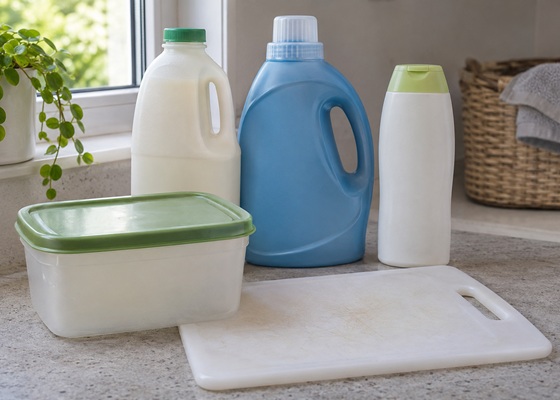
HDPE is widely used across Australia for milk and beverage bottles, household cleaning and personal care packaging, industrial chemical drums and IBC liners. It is also found in pipes, reusable crates and large wheelie bins. Yellow-lidded recycling bins provide an established collection route for many rigid containers, while eligible beverage packaging is recovered through state container deposit schemes. However, colour, cleanliness and material properties can vary considerably between these waste streams.
Quick answers for Australian recyclers
1. Can milk bottles, detergent bottles and industrial drums be processed together?
It is generally better to keep them separate. Natural-coloured food packaging, coloured household bottles, chemical drums, pipes and bins differ in colour, contamination and melt flow properties. Sorting by source and application helps maintain pellet consistency and protects the value of the recycled material.
2. Does washed HDPE always need to be pelletised?
Not necessarily. Clean, consistent HDPE flakes may be suitable for some direct extrusion applications. Where the buyer requires tighter control over melt flow, colour or contamination, melt filtration and pelletising are usually needed.
From Packaging Recovery to Locally Reprocessed HDPE
Australian Government data for 2024–25 shows that HDPE accounted for around 17% of national plastics consumption, making it one of the country’s most widely used polymers. Its recovery rate, however, was only 21%. During the same period, domestic plastics reprocessing increased by 34.4% to 403,000 tonnes. The direction is clear: the industry is moving beyond collection and towards processing recovered plastics within Australia.
A PE recycling facility in Laverton, Victoria, is already converting household HDPE and PP packaging into food-grade and non-food-grade recycled resin, with an annual processing capacity of more than 20,000 tonnes. Projects of this kind show that reliable HDPE plastic recycling depends on connecting sorting, washing, filtration and pelletising rather than stopping at baling or shredding.
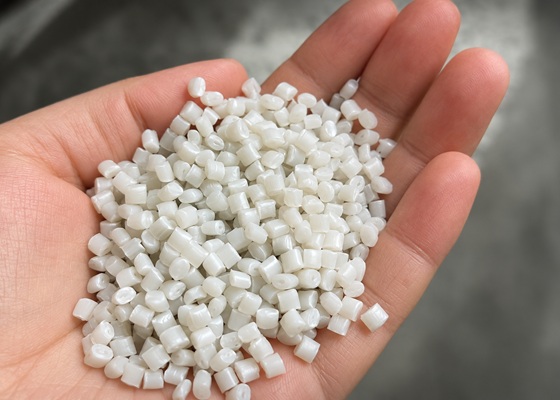
Recycled HDPE pellets can be used to manufacture non-food bottles, pipes, wheelie bins, pallets and other rigid products. Pellets that meet the required food-contact standards may also return to selected food-grade packaging applications.
How an HDPE Pelletising Machine Processes Washed Flakes
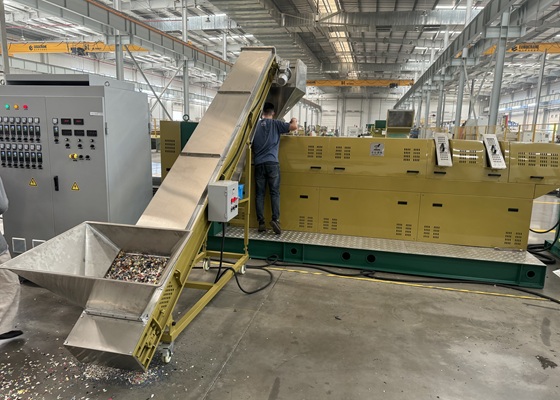
After shredding, washing and drying, HDPE bottle flakes, drum regrind and rigid automotive plastic can enter a GREENMAX HDPE pelletising machine. The system combines controlled feeding, two-stage extrusion and filtration, strand pelletising and finished-pellet storage, providing a continuous reprocessing route for HDPE recycling Australia projects.
1. Screw conveying: A screw conveyor transfers the HDPE flakes continuously to the feeding system. This reduces manual handling and maintains a steady material supply.
2. Metered feeding: The feeder regulates the input rate according to the extruder’s operating condition. Consistent feeding helps prevent fluctuations that could affect plasticisation.
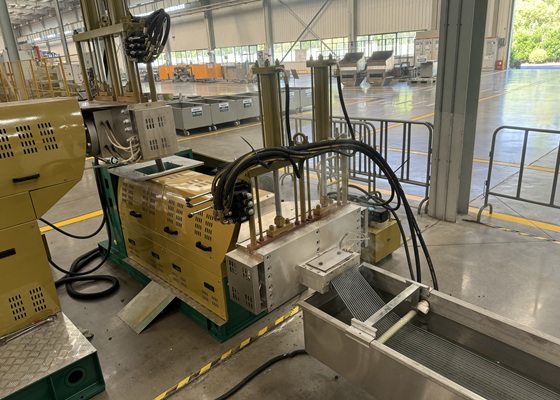
3. First-stage extrusion and filtration: A high-torque screw conveys and mixes the material as it melts, providing initial plasticisation and degassing. The melt then passes through the first screen changer, which removes label fragments and other unmelted contaminants.
4. Second-stage extrusion and filtration: The pre-filtered HDPE melt enters the second extruder for further mixing, degassing and homogenisation. A second screen changer removes finer impurities, improving pellet purity and consistency.
5. Strand pelletising: The filtered melt is extruded through the die into continuous strands. These pass through a water bath for cooling before being cut into evenly sized recycled HDPE pellets.
6. Conveying and storage: The finished pellets are pneumatically transferred to a storage silo, ready for weighing, bagging or use in downstream manufacturing.
Two-stage extrusion and dual filtration improve plasticisation, degassing and contaminant control, helping the GREENMAX HDPE pelletising machine maintain a more stable output. For Australian recyclers looking to move beyond washed flakes, this process can improve both the value of the material and the range of potential end uses.
Demand for Locally Recycled HDPE Is Growing
Australia’s National Packaging Targets set a recycled-content target of 20% for HDPE packaging. Recent figures indicate that post-consumer recycled content in rigid plastic packaging is around 16%, leaving room for further growth in locally produced recycled resin.
Before investing in an HDPE pelletising machine, recyclers should confirm the source and contamination level of the feedstock, the required pellet grade and the intended downstream application. GREENMAX can configure shredding, washing, dewatering and pelletising systems for milk bottles, household packaging, industrial drums, HDPE pipes and other rigid plastic streams.
Planning an HDPE plastic recycling project in Australia?
Send GREENMAX photos of your material, its composition, expected monthly volume and the intended use of the finished pellets. We can arrange a material test and recommend an appropriate HDPE pelletising machine together with the required front-end processing equipment.
Request an HDPE recycling and pelletising solution:
Email GREENMAX: sales@greenmaxmachine.com.au
Contact Us on WhatsApp: +1 773 482 3129
The following video records an HDPE pelletising trial at the GREENMAX facility. The feedstock consists mainly of shredded plastic bottle-cap flakes.
It shows the material moving through continuous feeding, melt extrusion, filtration, strand cooling and pellet cutting. Australian recyclers can use the footage to assess the operating process and the appearance of the finished pellets.