
 Select Languange
 English
 Spanish
 Polish
 Japanese
 Italian
 French
Disposal of out of date beverages: automated dewatering and compaction of beverage packaging
The recycler that beverage producers are looking for
Australia's packaging rules have shifted decisively. The federal government's reform agenda — mandatory national packaging standards, extended producer responsibility, and phase-outs of problematic materials — moved from consultation to design through 2025 and 2026, and the Container Deposit Scheme now runs in every state and territory, with Tasmania completing coverage in 2025. NSW has added its own requirement: from 1 July 2026, larger food waste generators, including supermarkets and hospitality businesses, must separate food organics for recovery. For beverage and food companies the practical effect is much the same everywhere: out of date stock, off-spec batches and mislabelled products need a documented route from return through to final destination, and the work is usually handed to a downstream recycler.
Most recyclers in Australia have earned their stripes on rigid plastics, metals or foam. A sealed pack full of liquid is another matter. A spoiled yoghurt or a can of soft drink past its date can't be baled as it sits, and it won't go through a wash line either — so plenty of these consignments have been politely declined.
The process itself, though, is not complicated. First comes the disposal of out of date beverages — separating the liquid from its packaging — after which each stream travels to its own outlet. What decides whether a recycler can take the job is capacity at precisely that first step.
How out of date drinks and food packaging are processed
Returned goods in sealed packaging cannot be mixed with ordinary plastics or metals. Emptying and phase separation come first.
1. PET bottles, aluminium cans, yoghurt pots and beverage cartons (Tetra Pak) are fed into the dewatering machine for beverage packaging.
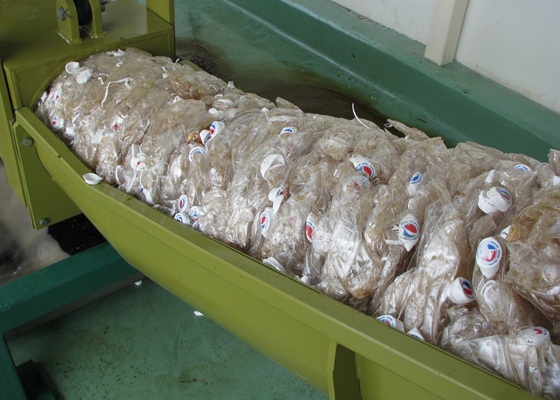
2. The screw applies continuous pressure; the liquid inside is pressed out and channelled to a defined collection area.
3. The packaging is dewatered and compacted, cutting both residual liquid and transport volume.
4. Contents and packaging are collected separately and routed to different downstream outlets.
The organic fraction — drinks, dairy products — is handled according to its composition and state regulations: it can feed anaerobic digestion and biogas production, or go to a wastewater treatment plant holding the appropriate licence. Where animal-origin products are destined for composting or stockfeed, the Australian ruminant feed ban applies, keeping restricted animal material out of ruminant diets. What is not permitted is discharging untreated liquid straight to the sewerage system — trade waste agreements with the local water utility set the conditions for that.
The packaging's route depends on the material. PET and aluminium, once washed, return to conventional material recycling; yoghurt pots in PP or PS are sorted according to local outlets; beverage cartons usually go to specialist processors, where the board fibre is separated from the plastic and aluminium layers — in Australia, operations such as saveBOARD in Victoria even press used cartons into building board.
From manual emptying to automated separation
By hand, this work does not scale. One person empties in a day a fraction of what a single delivery brings in; spilt liquid ferments, smells and attracts vermin; a consignment of tens of tonnes can tie up a crew for days at a cost that swallows the entire margin. The larger the operation, the sooner this model runs out of road.
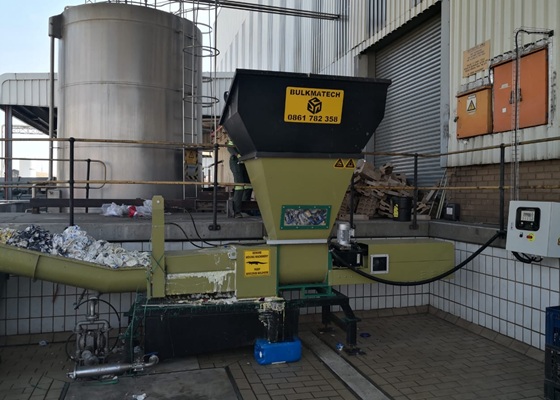
The steadier answer is to leave the disposal of out of date beverages to a dewatering machine for beverage packaging rather than to manual labour. The GREENMAX Poseidon series (P-C200, C350 and C900) — a depackaging machine — completes both operations through screw compression alone:
1. The liquid is pressed out and collected in the tank beneath the machine, ready for controlled discharge or transfer.
2. The compacted packaging drops into a collection container, aligned directly with the downstream recycling route.
One machine, a range of packaging
Consignments rarely arrive in a single material. Today it is PET bottles returned by a supermarket; tomorrow cans, yoghurt pots or drinks in cartons. A dedicated machine for every format would multiply both the capital outlay and the running burden.
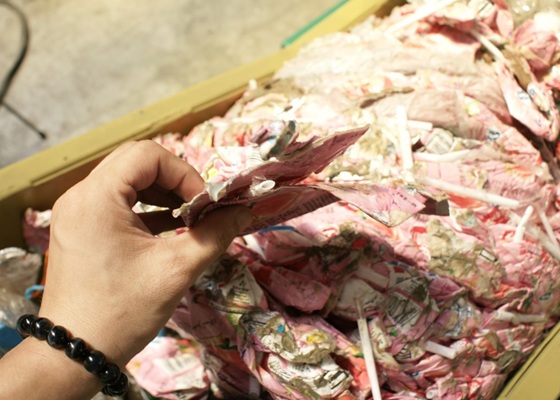
The Poseidon series dewatering machine for beverage packaging accepts bottles, cans, pots and composite cartons. Material is fed in batches, the disposal of out of date beverages runs automatically, with compaction ratios of up to 10:1 and dewatering of up to 90 per cent. The liquid travels through closed pipework into the tank, the floor stays dry, and the line runs continuously with one or two operators.
With such a machine a recycler widens the range of food and drink waste it can accept without buying equipment for every format — and puts its existing capacity to fuller use.
The following GREENMAX video shows liquid separation from packaging in a real operation:
Three questions recyclers ask
1. What happens to the separated liquid?
The machine comes with prepared ports for pipework connections, so the liquid reaches the tank with minimal losses and no puddles on the floor. Fractions with no further use go to the wastewater treatment works or a permitted operator; suitable organic liquids can feed anaerobic digestion plants.
2. Can dewatered packaging be sold?
Once the disposal of out of date beverages is done, the material stores, transports and sorts more easily. PET bottles return to plastics recycling and cans go to the smelter; cartons and yoghurt pots are passed on sorted, to the appropriate reprocessor. Value depends on purity, moisture content and the local market.
3. What if several materials arrive mixed?
Bottles, cans, pots and cartons all pass through the same Poseidon. Batching by material or by load is recommended so as not to complicate downstream recycling — but a separate machine for every type is not necessary.