 Select Languange
 English
 Spanish
 Polish
 Japanese
 Italian
 French
How to Choose a PE Foam Compactor in Australia: 7 Points Often Overlooked
Expanded polyethylene is commonly called polyethylene foam, PE foam or EPE foam in Australia. It is widely used to protect electronics, appliances, automotive parts, furniture and industrial equipment during storage and transport.
When planning polyethylene foam recycling Australia, the first question is not simply how much material can be compacted. The machine must suit the foam structure, its tendency to rebound, conditions at the site and the form of material accepted by the downstream recycler.
1. Confirm whether the foam is cross-linked
Before choosing a PE foam compactor, determine whether the material is cross-linked or non-cross-linked.
Non-cross-linked EPE remains thermoplastic and can be compacted, melted or pelletised. Cross-linked foam does not remelt and reform in the same way. It generally requires shredding, use as a filler or another specialised recovery method.
If the aim is to compact or melt the waste for further recycling, identifying the material should come before equipment selection. Product specifications from the supplier can help, but a trial with actual waste provides a more reliable answer.
2. EPE rebound makes ordinary compaction unreliable
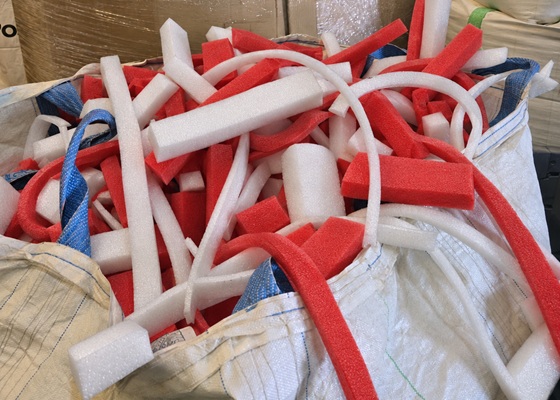
EPE is flexible and has a strong recovery force. When it is compressed using screw pressure alone, the block may expand, crack or loosen after leaving the machine. The initial volume reduction can therefore be difficult to maintain.
A suitable EPE recycling machine needs a way to control this rebound. On a screw-compaction system, light surface heat-setting at the outlet helps the outside of the block bind and cool into a stable form. This reduces the risk of the material coming apart during storage or transport.
3. Compaction or melting: two processing routes
There are two main ways to reduce the volume of PE foam. Screw compaction combined with surface heat-setting can achieve a reduction ratio of about 50:1. Full thermal melting, extrusion and cooling can increase this to approximately 90:1.
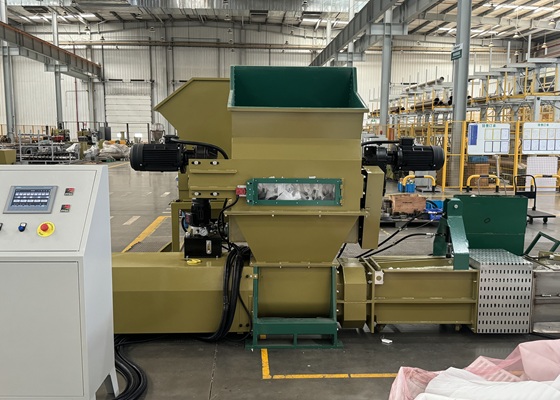
The GREENMAX ZEUS series first shreds the foam, then compresses it through a screw. A light surface-heating stage stabilises the finished block. The Z-C100 has a total power rating of approximately 20.45 kW and produces compacted material with a typical density of 200–400 kg/m³. Energy use and odour are lower than with full melting.
The GREENMAX MARS series heats and melts the foam before extruding and cooling it into dense ingots. The M-C100 can reach a reduction ratio of about 90:1 and a material density of approximately 600–800 kg/m³. This route is more suitable where storage is limited, transport distances are long or the downstream recycler accepts melted material.
A machine marketed as a polystyrene melting machine should not automatically be selected for polyethylene foam. The feedstock and operating settings must be confirmed, as PE and polystyrene are different polymers. GREENMAX can arrange trials to verify whether the proposed configuration suits the customer’s EPE waste.
| Parameter | Z-C100 | M-C100 |
|---|---|---|
| Processing capacity | 100 kg/h | 100 kg/h |
| Total power | 20.45 kW (27.4 hp) | 25.1 kW (33.7 hp) |
| Volume reduction ratio | 50:1 | 90:1 |
| Compacted material density | 200–400 kg/m³ | 600–800 kg/m³ |
| Dimensions (L × W) | 4.06 × 0.57 m | 2.03 × 1.5 m |
| Weight | 1,650 kg | 1,500 kg |
4. Remove tape, labels and mixed packaging before feeding
EPE packaging often arrives with adhesive tape, labels, cardboard or laminated film attached. These contaminants can interrupt feeding, reduce the quality of the compacted material and increase wear on the screw and shredding components.
Clean production offcuts should be separated from used packaging at the source. Thin sheets, rolls and thick moulded pieces may be made from the same polymer, but they behave differently during feeding. Processing them in separate batches makes it easier to maintain a steady throughput and adjust the machine correctly.
5. Check power, ventilation and maintenance requirements
Australian industrial sites commonly use three-phase 400–415 V, 50 Hz power. Before ordering equipment, confirm the available voltage, electrical capacity, protection system and plug or connection requirements at the site.
A thermal melting machine generates heat and some process odour, so adequate ventilation, exhaust provision and clearance for heat dissipation are required. Screw compaction with surface heat-setting generally places fewer demands on ventilation, although the final arrangement still depends on the material and factory layout.
EPE is resilient, and continuously shredding large packaging pieces can wear screws and blades over time. Check the material used for these components, expected replacement intervals and local availability of spare parts before making a purchase.
6. Test the machine with your actual PE foam waste
EPE from different suppliers can vary considerably in density, thickness, hardness and rebound. Catalogue capacity is useful for initial comparison, but it cannot fully predict performance with a particular waste stream.
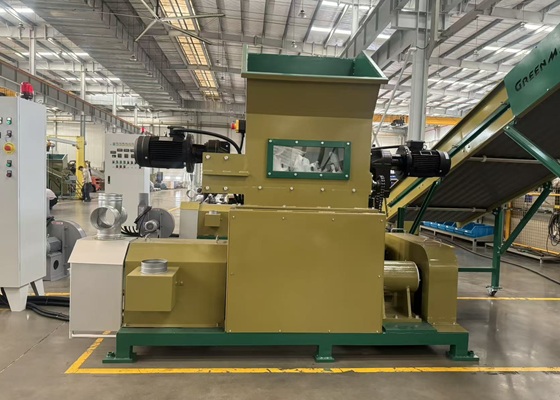
A practical trial should assess whether the material feeds smoothly, whether the finished block remains stable, whether its density is suitable for transport and whether the actual hourly output matches the site’s operating needs. Screw speed, block length and surface heat-setting temperature can then be adjusted according to the results.
For a PE foam compactor, data produced from the customer’s own material is more useful than a general specification alone.
7. Check current grants and waste regulations
Australian businesses considering a PE foam recycling project may be able to access state-based circular economy funding. Victoria’s Circular Economy Recycling Modernisation Fund previously supported equipment for hard-to-recycle plastics, including EPS and PS. Its sixth round closed on 11 June 2026 and required for-profit applicants to contribute at least A$2 for every A$1 of grant funding.
NSW has also offered support through the Circular Plastics Program, although the previous funding rounds are now closed. As programs and eligibility rules change, businesses should check current opportunities through DEECA, the relevant state EPA and the Australian Government’s grants and programs finder before including funding in an investment budget.
Disposal costs are another consideration. The NSW Metropolitan Levy Area waste levy reached A$180.20 per tonne for 2026–27. Loose PE foam is lightweight but consumes substantial storage and transport space. Establishing a clear sorting and volume-reduction process can therefore reduce handling, freight and waste disposal pressure for businesses that regularly generate EPE packaging waste.