 Select Languange
 English
 Spanish
 Polish
 Japanese
 Italian
 French
EPE Packaging Waste in Australia’s Solar Warehouses: Three GREENMAX Recycling Machines Compared
A Leading Rooftop Solar Market with Packaging Waste That Is Difficult to Move
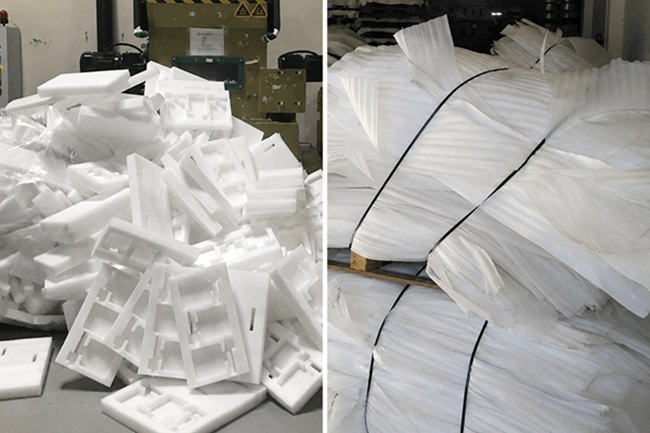
EPE foam is widely used to protect solar panels, inverters and battery systems during transport. In Australia, much of this packaging waste is concentrated at distribution warehouses. By the end of 2025, the country had more than 4.3 million rooftop solar installations with a combined capacity of approximately 28.3 GW. In the first six months of the Cheaper Home Batteries Program, more than 200,000 household battery systems were installed, further increasing the amount of EPE unpacked at warehouses.
The problem is not the recyclability of the material, but its volume. EPE is lightweight, bulky and prone to spring-back. With relatively few local buyers, freight costs can quickly exceed the value of loose foam. In the NSW Metropolitan Levy Area, the waste levy will reach A$180.20 per tonne in 2026–27, before transport, handling and commercial gate fees are added.
For recyclers, this creates a potential source of clean, concentrated material. Effective polyethylene foam recycling begins by increasing density where the waste is generated. A suitable polyethylene compactor reduces storage requirements, improves truck payloads and extends the practical collection radius. Solar panel warehouses, battery distributors and regional retailers can all become consistent sources of EPE.
Comparing Three EPE Volume-Reduction Systems
MARS: Maximum Density for Long-Distance Transport
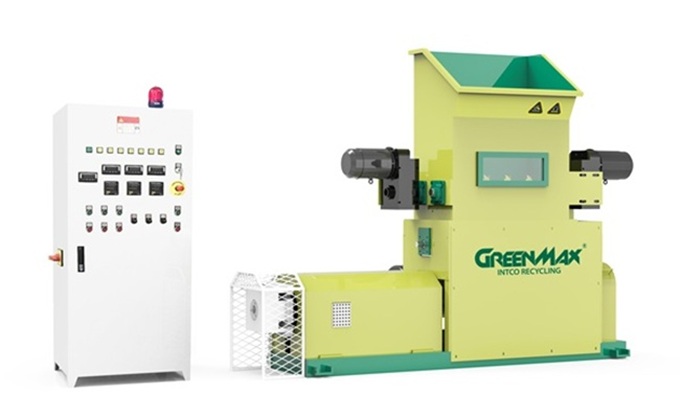
The MARS series combines shredding, screw conveying and controlled heating to produce high-density melted blocks. The M-C200 processes up to approximately 200 kg/h and can reduce EPE volume by as much as 90:1.
Where local buyers are limited and material must travel interstate, MARS EPE foam melting machine generally offers the strongest freight advantage. Before choosing a hot-melt system, operators should also consider energy use, ventilation requirements and whether the intended buyer accepts melted PE foam.
HYDRAULIC: High-Pressure Compaction without Full Melting
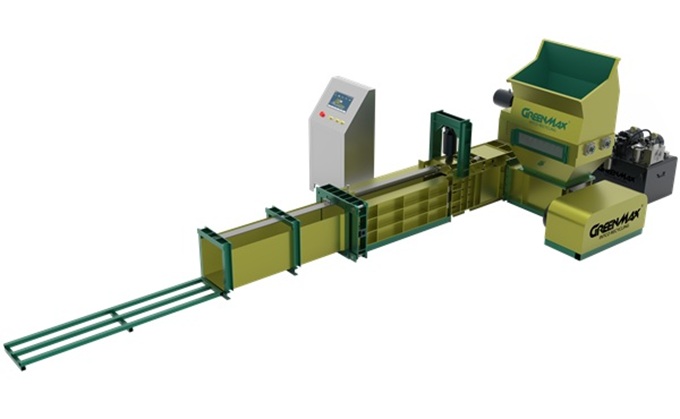
The HYDRAULIC series uses hydraulic pressure to form dense blocks without fully melting the material. The H-C200 EPE foam recycling machine has a maximum throughput of approximately 200 kg/h and can achieve a volume reduction of up to 70:1.
This option may suit sites with concentrated waste streams, long transport distances or buyers that require dense, cold-compacted material. The system needs adequate space for the hydraulic chamber and block discharge. As EPE grades vary in hardness and rebound, suitability and final block density should be confirmed through a material trial.
ZEUS: Surface-Softened Compaction Designed for EPE Spring-Back
Unlike EPS, EPE tends to recover its shape after simple cold compression. The ZEUS series addresses this behaviour by shredding and screw-compacting the foam, then applying controlled surface heat to seal and stabilise the block. The material is not melted throughout.
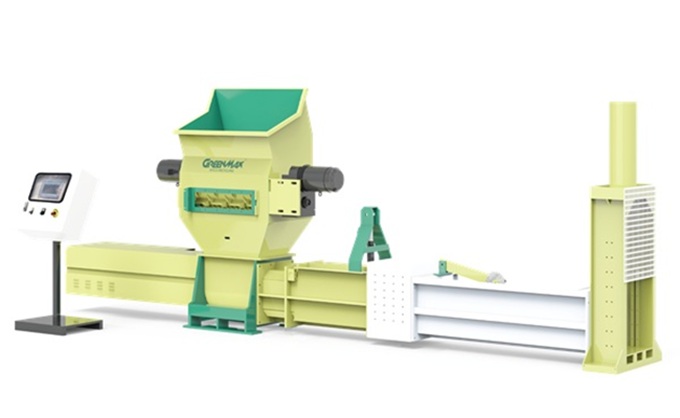
The Z-C200 polyethylene compactor processes up to approximately 200 kg/h. It suits solar distribution warehouses and logistics centres that generate a steady supply of clean EPE packaging. The resulting blocks are stable, regular in shape and easier to stack, store and send for pelletising.
Choosing an EPE Foam Recycling Machine for the Site
ZEUS is well suited to continuous operation where a stable, surface-sealed block is preferred. HYDRAULIC is worth assessing when high-density compaction is required without fully melting the foam. If long-distance freight is the main cost, MARS may provide the greatest volume reduction.
Throughput alone should not determine the choice of EPE foam recycling machine. Foam thickness, daily waste volume, available floor space, transport distance and the buyer’s material specifications all affect the result. Confirming who will take the processed material—and in what form—before selecting the equipment helps avoid replacing one logistics problem with another.
If your business is managing PE foam packaging waste, contact GREENMAX to discuss a suitable solution: sales@greenmaxmachine.com.au.
|
Equipment |
Volume-Reduction Method |
Volume Reduction |
Typical Output Density |
|---|---|---|---|
|
MARS Melting Machine |
Heated melting and densification |
Up to 90:1 |
600–800 kg/m³ |
| HYDRAULIC Compactor | High-pressure hydraulic compaction | Up to 70:1 | Depends on the EPE grade and operating settings; material testing is recommended |
|
ZEUS Compactor |
Screw compaction with surface softening |
Up to 50:1 | 200–400 kg/m³ |
Two Common Questions
1. Who Buys Compacted PE Foam?
Compacted and melted PE foam can be supplied to specialist recyclers and pellet manufacturers. Acceptance standards vary, so businesses should confirm the polymer grade, contamination limits, preferred block form and minimum collection quantity with the intended buyer. GREENMAX can also assist in assessing potential local outlets.
2. Does Cold Compaction or Hot Melting Produce More Valuable Material?
Neither method automatically creates a higher-value product. The final value depends on material purity, polymer grade, density and the buyer’s processing requirements. Hot-melt blocks usually offer better freight efficiency, while compacted material may suit buyers that prefer foam that has not been fully melted. The downstream outlet should be confirmed before the equipment is selected.