 Select Languange
 English
 Spanish
 Polish
 Japanese
 Italian
 French
Automotive EPP Recycling in Australia: How 90:1 Volume Reduction Changes Storage and Transport
For recyclers handling EPP packaging from the automotive sector, the main challenge is usually not whether EPP can be recycled. It is how to collect, store and consolidate enough material without allowing bulky foam to take over valuable floor space.
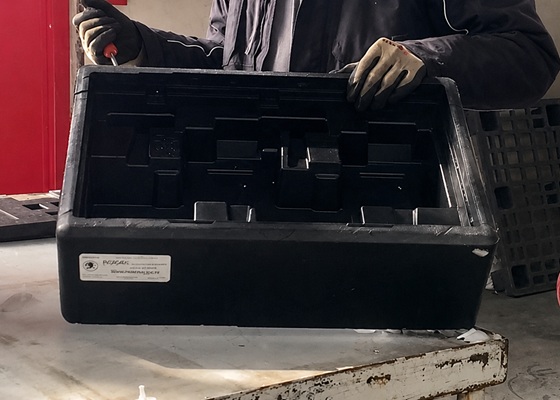
EPP protective parts and transport packaging are lightweight but highly voluminous. Once loose material starts arriving from automotive suppliers, manufacturers or logistics sites, it can quickly fill storage areas. If it is transported without volume reduction, a large part of the truck is effectively carrying air.
For this reason, improving Automotive EPP recycling often starts with reducing the volume before the material leaves the recycling site.
Volume Has a Direct Impact on EPP Foam Recycling Australia
Australian recyclers may collect EPP from several automotive customers and consolidate it at one facility before arranging onward transport. The problem is that loose EPP takes up space very quickly. As collection volumes increase, so does the pressure on storage.
Even when the EPP itself has recycling value, transport efficiency remains limited if a truck reaches full volume before it carries a useful weight of material.
Volume reduction allows the same storage and transport space to hold substantially more EPP. This can reduce the need for frequent collections and makes it easier for recyclers to build up a suitable load before sending the material to the next processing stage.
From Loose Automotive EPP to Dense Material
A typical processing route for automotive EPP packaging can be organised as follows:
EPP collection → sorting → crushing → thermal densification → storage → transport
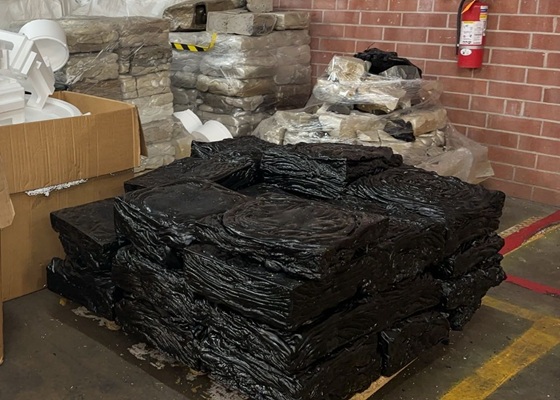
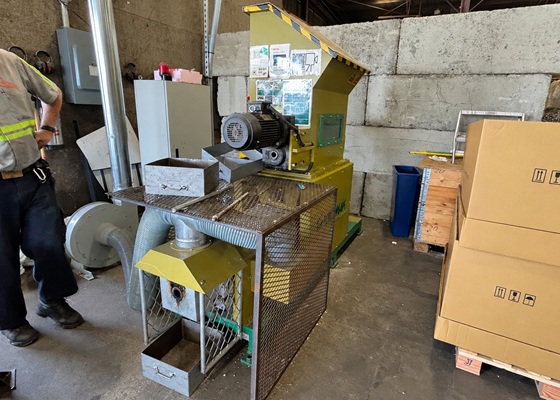
The GREENMAX MARS EPP recycling machine is mainly used for the crushing and densification stages. The EPP is first reduced in size, then heated and extruded into a much denser material. The volume reduction ratio can reach approximately 90:1.
After processing, loose EPP becomes compact blocks that are easier to stack, store and transport.
For recyclers, densification is not simply about making the foam smaller. It allows limited warehouse and truck capacity to carry more recyclable plastic rather than empty space.
A Compact EPP Foam Densifier for Recycling Sites
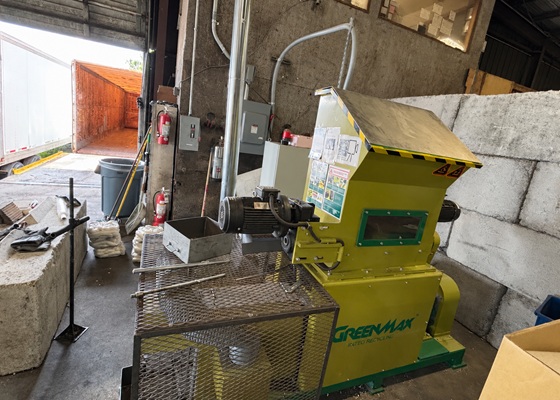
The GREENMAX MARS EPP foam densifier has a relatively compact footprint and straightforward operating controls, making it suitable for recycling facilities where floor space is limited.
Its approximately 90:1 volume reduction can significantly reduce the space required for loose EPP. As material continues to arrive, recyclers can store more densified foam within the same area and arrange transport when a practical volume has been accumulated.
For recyclers that regularly receive EPP packaging from automotive suppliers, manufacturers or other businesses in the automotive supply chain, this type of system can fit naturally into day-to-day Automotive EPP recycling operations.
Common Questions About Automotive EPP Recycling
1. How much can GREENMAX MARS reduce EPP?
GREENMAX MARS processes EPP through crushing and thermal densification, achieving a volume reduction ratio of up to approximately 90:1.
The EPP is first crushed into smaller pieces. Once the material reaches a suitable size, it enters the heating section, where it gradually softens and melts. A screw then continuously extrudes the material into dense blocks.
The video below shows the full process from loose EPP through crushing to densified output.
GREENMAX also has experience processing higher-density EPP materials in the range of 60–80 kg/m³. Depending on the material, an additional crushing stage can be added and the residence time in the heating section adjusted to improve processing.
2. Does the machine require a dedicated operator?
No dedicated full-time operator is normally required. GREENMAX MARS EPP recycling machine is designed for relatively simple day-to-day operation, with temperature controls and start/stop functions managed through the control panel.
GREENMAX also provides operating manuals and training videos. After around 20 minutes of basic training, staff can generally understand the main operating steps and routine safety requirements.
3. What if EPP volumes are still small but expected to grow?
For businesses with lower current volumes, the GREENMAX MARS M-C50 offers a compact option with good mobility and a relatively small footprint.
If your business is already involved in EPP foam recycling Australia, GREENMAX can review your current waste volume and help plan a suitable recycling setup. We can also discuss the purchase of densified EPP material, giving recyclers a clearer view of the full route from collection and volume reduction through to pelletising and reuse.
WhatsApp: +86 188 5128 2518