 Select Languange
 English
 Spanish
 Polish
 Japanese
 Italian
 French
Retail Polystyrene Recycling in NSW: Turn Bulky Foam Into Dense Blocks On-Site
Back‑of‑house reality: foam fills space, not bins
In retail—especially electronics and appliance retail—polystyrene (EPS) packaging builds up fast. The problem usually isn’t weight. It’s volume:
Cages and bins overflow quickly
Loose foam breaks apart and spreads
Stockroom and receiving bays lose usable space
Collections happen more often than you’d like, just to move “air”
A practical fix is on‑site densification: compressing loose foam into stable blocks that are easy to stack, store, and move.
Retail foam sources we see most often (NSW)
In NSW retail operations, polystyrene/foam typically comes from:
- Electronics & appliances (TVs, monitors, computers, kitchen appliances)
- Small appliances & home tech (coffee machines, vacuums, audio gear)
- Click & Collect / in-store fulfilment (protective packaging added for transport)
- Returns & exchanges (packaging comes back with the product)
- Store refits & new store openings (bulk inbound stock and display materials)
- Seasonal peaks (promotions and high-volume inbound deliveries)
If your team is constantly “breaking down boxes” and foam is filling the waste area, it’s a strong sign you need an on-site densification step.
Why hydraulic compaction fits retail operations
For many retail sites, a hydraulic compactor is a better operational fit than “more bins” or “more pickups” because it creates a consistent, store-friendly output with minimal workflow disruption.
What you gain
Less overflow in receiving / back‑of‑house
Cleaner handling (foam stays contained)
More predictable storage (blocks instead of loose pieces)
Better transport efficiency (dense output vs loose foam)
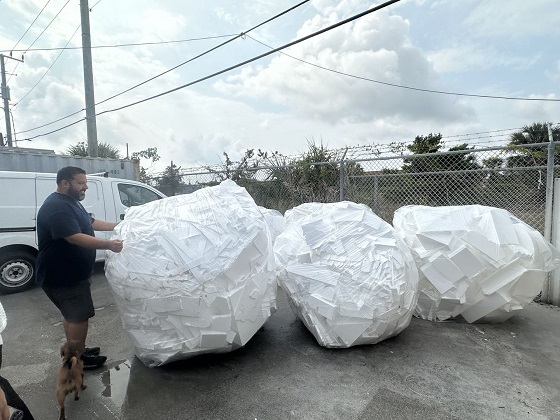
Recommended for retail: GREENMAX H‑C300 Hydraulic Compactor
The GREENMAX H‑C300 is designed to crush and compact foam into dense blocks (no heating), making it easier to manage day-to-day retail packaging waste.
Typical throughput (true throughput): 200–300 kg/h (model spec)
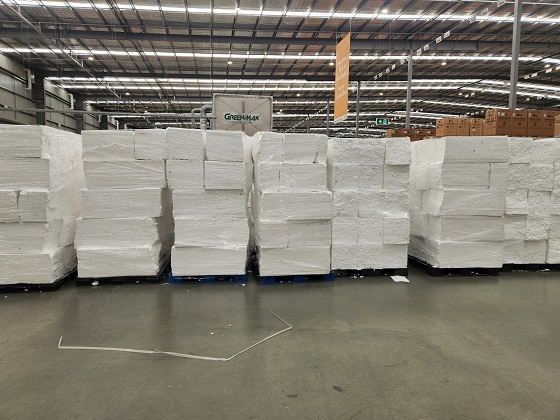
Output: compacted blocks you can stack/palletise for storage and transport.
If your retail group runs a DC, the value is even clearer: one standard process, one stable output format, and fewer surprises in the waste area.
Retail foam streams this setup can handle
Retail packaging is rarely one foam type. This setup can process a wide mix of foam streams: EPS / EPE / EPP—useful when packaging sources vary across suppliers and product lines.
Tip for smoother operations: keep foam dry and avoid hard contaminants (metal/wood/rigid plastic). A simple “foam-only” collection point at receiving makes a big difference.
Proof in retail: JB Hi‑Fi chose H‑C300
A published case write‑up states GREENMAX delivered a customised polystyrene hydraulic compactor H‑C300 to JB Hi‑Fi and supported assembly/debugging. The case also describes operational benefits like saving floor space and easier handling of compacted output.
What this means for NSW retail
- Retail packaging foam is continuous and high-volume
- A repeatable “foam → dense blocks” SOP is scalable
- Back‑of‑house space and housekeeping improve when loose foam is eliminated
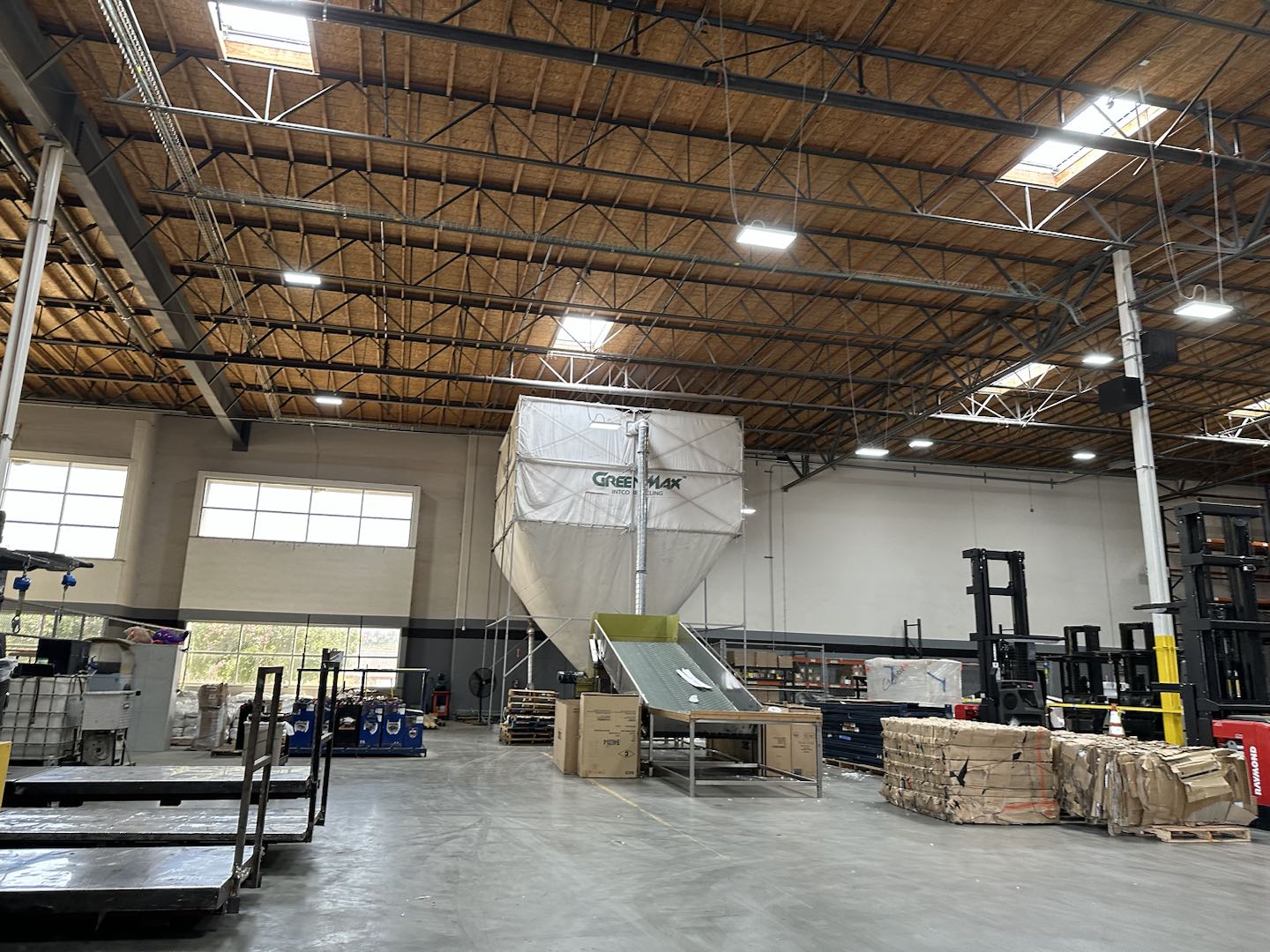
Suggested SOP for NSW retail sites (copy/paste ready)
1) Set up
Place a foam-only collection cage/bin at receiving/unpacking
Post a quick sign: “Foam only · Keep dry · No wood/metal/rigid plastics”
Decide a routine: densify daily (high volume) or 2–3× weekly (moderate volume)
2) Run
1. Collect foam at source
2. Quick check: remove hard contaminants
3. Feed into H‑C300
4. Move blocks to a dedicated storage bay / pallet area
5. Consolidate loads for transport/collection
3) Keep it consistent across stores
one output rule (blocks)
one storage location
one owner per shift
Servicing NSW retail sites — statewide coverage with on-site support
We service retail and distribution sites across all cities in NSW through our exclusive local Australian agent, providing on-site support for installation coordination, commissioning guidance, and after-sales service.
Whether you operate in Sydney metro or regional NSW, we help you set up a repeatable back-of-house process: collect foam → compact into dense blocks → stack/palletise → consolidate loads for transport.
When a melting machine makes sense
Some sites prefer ingots instead of blocks. If you want that output form, a polystyrene melting system (often called a hot melter/densifier) can be an option.
But for most retail back‑of‑house workflows, H‑C300 hydraulic compaction is typically simpler to standardise (no heating, stable blocks, straightforward handling).
Want to stop EPS overflow across your NSW stores or DC?
Tell us your foam mix (EPS/EPE/EPP), estimated weekly volume, and whether you prefer dense blocks (H‑C300). Our exclusive Australian agent supports on-site service across NSW to help you roll out a consistent back-of-house solution.
FAQ
Q1. What machine did JB Hi‑Fi use for polystyrene packaging?
A published case write‑up describes JB Hi‑Fi using a customised GREENMAX H‑C300 hydraulic compactor for polystyrene packaging.
Q2. How clean does the foam need to be?
Keep it dry and avoid hard contaminants (metal/wood/rigid plastics). Cleaner inputs improve consistency and downstream handling.
Q3. Is this suitable for multi‑store rollouts in NSW?
Yes—retailers often standardise a simple SOP (collect → compact → store blocks → consolidate loads) across stores or at a DC.