 Select Languange
 English
 Spanish
 Polish
 Japanese
 Italian
 French
HDPE Pelletising Machine in Australia: Turning Plastic Waste into Valuable Recycled Pellets
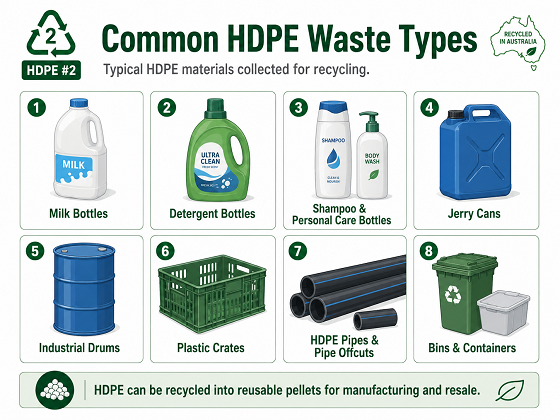
HDPE recycling is becoming more important for Australian recyclers, manufacturers, packaging users and waste management companies. High-density polyethylene, commonly known as HDPE or plastic #2, is widely used in milk bottles, detergent containers, industrial drums, crates, pipe offcuts, bins and many other rigid plastic products. When this material is collected, sorted and processed correctly, it can become a valuable recycled resource instead of a bulky waste stream.
For businesses handling large volumes of HDPE, a HDPE pelletising machine is a practical step towards higher-value recycling. Instead of only baling or selling loose plastic scrap, a pelletising line can convert cleaned HDPE flakes or regrind into consistent recycled HDPE pellets. These pellets can be reused in manufacturing or sold as recycled plastic feedstock.
Why HDPE Recycling Matters in Australia
Australia is pushing towards a more circular approach to packaging and plastic waste. The National Packaging Targets include 70% of plastic packaging being recycled or composted and 50% average recycled content in packaging. There is also a material-specific recycled content target for HDPE packaging, making HDPE one of the key materials in Australia's plastic recycling transition.
This creates a clear opportunity for HDPE recycling. Many Australian businesses already generate cleaner and more predictable HDPE waste streams than household recycling. Examples include manufacturing offcuts, HDPE pipe waste, industrial drums, crates, pallets and commercial packaging. When these materials are kept separate from PP, PVC, labels, metals, sand and moisture, they can become a reliable source for recycled HDPE pellets.
Australia's Waste Plastic Export Rules Make Processing More Important
Australia regulates the export of certain waste materials, including waste plastic. Regulated waste plastic export requires a waste export licence, and the material generally needs to be sorted into a single polymer, cleaned to remove contamination, and processed into a form ready for remanufacture.
For exporters, this changes the business logic. Unprocessed or poorly sorted plastic waste is harder to move through legal and commercial channels. Export licence assessment considers the polymer or resin type, contaminant thresholds, physical form, intended overseas use and whether the processed plastic can be remanufactured without further processing.
This is where HDPE pelletising becomes important. A well-designed recycling process can turn HDPE waste into a cleaner, more uniform and more marketable material. Plastic pellets made from waste plastic are generally not treated in the same way as unprocessed regulated waste plastic under the waste export licence category, but businesses should still check all applicable export, import and commercial requirements before shipping.
What Does a HDPE Pelletising Machine Do?
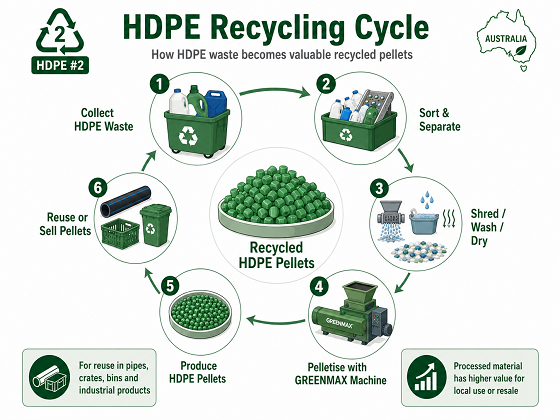
A HDPE pelletising machine is used after the main preparation stages of HDPE recycling. In a complete recycling workflow, HDPE waste is usually sorted, shredded or crushed, washed, dewatered and dried before extrusion. The pelletising machine then melts, filters, extrudes and cuts the material into uniform recycled HDPE pellets.
For rigid HDPE materials such as bottles, pipes, containers, drums and lumps, GREENMAX provides a rigid plastic pelletising solution designed for pre-crushed regrind materials. The machine can process HDPE as well as other plastics such as LDPE and PP, depending on the material stream and configuration. GREENMAX can also provide flexible add-ons such as conveyors, integrated crusher options, different pelletising methods and filter choices to match production requirements.
A typical HDPE recycling line may include:
1. HDPE collection and sorting
2. Shredding or crushing
3. Washing and contamination removal
4. Dewatering and drying
5. Extrusion and melt filtration
6. Pelletising into recycled HDPE pellets
7. Packing, reuse or sale
The better the input quality, the better the pellet value. Clean, dry and single-polymer HDPE usually gives recyclers more stable output, fewer machine interruptions and better buyer acceptance.
Why HDPE Pellets Have Higher Value
Recycled HDPE pellets are easier to store, transport, sell and reuse than loose or contaminated scrap. They are a standard feedstock form for many plastic manufacturers because pellets can be fed directly into extrusion, injection moulding or other plastic processing equipment.
For HDPE, common reuse applications include:
• Recycled plastic pipes and fittings
• Crates, pallets and bins
• Industrial sheets and panels
• Cable covers and construction products
• Non-food packaging
• Injection-moulded or extrusion products
Some recyclers may sell HDPE pellets to local or overseas buyers. Some manufacturers may use the pellets internally to reduce virgin material consumption. Others may choose a tolling model, where plastic scrap is converted into reusable resin and returned to the original business.
GREENMAX HDPE Pelletising Machine for Australian Recycling Businesses
GREENMAX offers practical plastic recycling equipment for businesses that want to improve HDPE waste handling and create higher-value recycled output. For Australian recyclers, the right machine configuration depends on several factors:
• Material type: HDPE bottles, drums, pipe offcuts, crates, containers or mixed rigid plastic
• Contamination level: labels, sand, oil, moisture or non-HDPE plastics
• Output target: flakes, regrind or recycled HDPE pellets
• Daily processing volume
• Available factory space
• Local reuse, pellet sale or export plan
GREENMAX can recommend a suitable HDPE pelletising machine or full recycling line based on the real condition of your material. For clean and consistent HDPE streams, pelletising can help improve product value. For bulky or mixed HDPE waste, pre-processing steps such as shredding, washing and drying may be needed before pellet production.
From HDPE Waste to Recycling Revenue
HDPE recycling is not only an environmental action. It can also become a business opportunity. As Australia continues to build local recycling capacity and increase recycled content in packaging and manufacturing, demand for stable recycled plastic feedstock is likely to remain important.
For companies that already collect HDPE waste, a pelletising machine can help move the business from simple waste disposal to material recovery. Instead of paying for waste removal or selling low-value scrap, businesses can process HDPE into pellets that are easier to reuse, trade and transport.
Contact GREENMAX
Send us photos of your HDPE waste, your approximate daily volume and your target output. GREENMAX will help you decide whether your project is better suited for shredding, washing, pelletising or a complete HDPE recycling line.
FAQs
What is the best keyword for this machine in Australia?
For Australia, HDPE pelletising machine and plastic recycling pelletiser are more natural local terms. However, HDPE pelletizing machine should also be included because many international machinery suppliers, including GREENMAX, use the American spelling "pelletizing".
Can HDPE waste be exported from Australia?
Regulated waste plastic export generally requires a waste export licence and must meet processing requirements, including single-polymer sorting, contamination removal and readiness for remanufacture. Plastic pellets made from waste plastic are treated differently from unprocessed regulated waste plastic, but exporters should still confirm all relevant legal and destination-country requirements.
Why are HDPE pellets more valuable than HDPE scrap?
HDPE pellets are cleaner, more uniform and easier for manufacturers to use. They can be sold as recycled plastic feedstock or reused to make products such as pipes, crates, bins, panels, industrial sheets and other moulded or extruded products.
What HDPE materials can GREENMAX help recycle?
GREENMAX can help assess HDPE bottles, containers, drums, crates, pipe offcuts, rigid regrind and other commercial or industrial HDPE waste streams. The final equipment recommendation depends on contamination level, material size, daily volume and desired output.