 Select Languange
 English
 Spanish
 Polish
 Japanese
 Italian
 French
From Foam to Future: How EPS Recycling Is Changing the Industry
Introduction: The Foam That Won’t Go Away
You’ve seen it everywhere—those lightweight white blocks cushioning electronics, protecting appliances, or cradling takeout food. It’s called EPS (Expanded Polystyrene), commonly known as styrofoam. While it does a great job protecting products, it’s notorious for one thing: it doesn’t break down easily.
EPS can take hundreds of years to decompose in a landfill. That’s right—your coffee cup from last year could outlive generations. But here’s the good news: with innovation and the right recycling technology, EPS doesn't have to be waste. It can be transformed, reused, and given a second life.
What Is EPS, Really?
EPS is a type of rigid plastic foam made from polystyrene beads expanded using steam. It's 98% air, making it extremely lightweight and ideal for packaging, insulation, and food service containers. However, its structure makes it difficult and expensive to collect, transport, and recycle—until now.
The EPS Recycling Problem (and Opportunity)
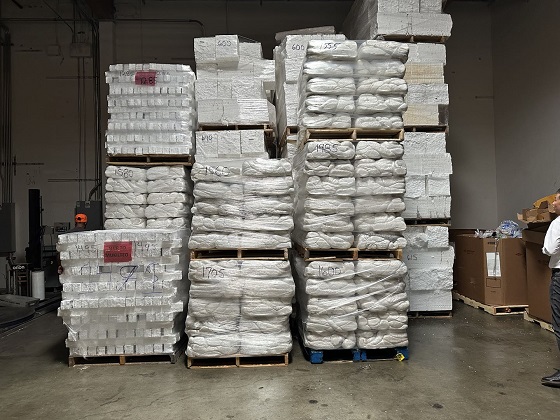
Globally, millions of tons of EPS are produced each year, but less than 10% is recycled. The main reason? Its bulky nature. Imagine transporting mountains of mostly-air foam—it’s not cost-effective, and it clogs up waste systems.
But here’s where the opportunity lies: if we can compact EPS efficiently, we can recycle it cost-effectively—turning a global waste problem into a resource stream.

Meet GREENMAX: The Foam-Fighting Hero
This is where GREENMAX comes in.
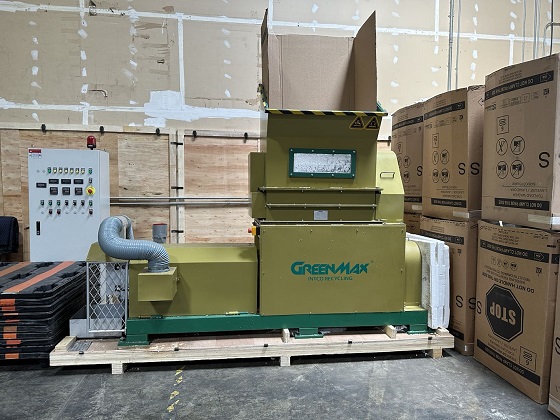
GREENMAX EPS recycling machines, developed by INTCO Recycling, are changing the game for EPS waste management. These machines are designed to compact, densify, and recycle EPS efficiently and sustainably.
There are two main solutions:
1. Compacting (Cold Press) – GREENMAX APOLO Series
These machines crush and compress EPS into dense blocks using mechanical force—no heat, no emissions, just smart engineering. The result: volume reduced by up to 50:1, making storage and transportation drastically cheaper.
2. Melting (Hot Melt) – GREENMAX MARS Series
Here, EPS is not just compacted—it’s melted into dense ingots using heat. These ingots can then be sold as raw materials to plastic manufacturers, closing the loop for a circular economy.
What Happens to Recycled EPS?
Recycled EPS, whether compacted or melted, can be used to produce a wide range of new plastic products:
Picture frames
Decorative moldings
Insulation materials
Office supplies
Even new packaging materials
That once “useless” foam becomes a valuable resource. Thanks to GREENMAX technology, waste becomes opportunity.
Fun Fact Corner: Did You Know?
One large GREENMAX machine can process over 300 kg of EPS per hour—that’s like reducing a room full of foam into just a few bricks.
Some cities are using compacted EPS bricks to build furniture and outdoor benches.
Recycled EPS is so clean it can be turned into HIPS pellets, which are used in everything from TV casings to printer shells.
Why It Matters
EPS recycling isn’t just about keeping landfills tidy—it’s about:
Reducing carbon emissions
Saving raw materials
Creating new business opportunities
Educating communities about sustainability
And with technologies like GREENMAX EPS recycling machines, businesses and municipalities alike now have the tools to make that happen.
Conclusion: Small Foam, Big Potential
EPS might seem like just another annoying packaging material—but when recycled the right way, it represents a huge environmental and economic opportunity. Whether you’re a manufacturer, recycler, retailer, or simply a curious consumer, it’s time to look at EPS not as trash—but as treasure.
With companies like INTCO Recycling leading the charge through GREENMAX, the future of EPS is not in the landfill—it’s in circularity.