 Select Languange
 English
 Spanish
 Polish
 Japanese
 Italian
 French
Christmas in Australia: Why EPS Packaging Waste Spikes—and What to Do About It
In Australia, Christmas is beach weather, busy back-of-house docks, and a lot of packaging. The festive season isn’t just a shopping peak—it’s a waste peak too. Research often cited in Australia notes the amount of waste produced at Christmas can be around 30% higher than the rest of the year.
Add record online shopping volumes and you get a perfect storm: more deliveries, more protective packaging, and more expanded polystyrene (EPS) building up in retail storerooms and warehouse yards.

The numbers behind the December EPS blowout
Recent peak-season parcel reporting shows how fast packaging volumes can jump. Across November–December 2024, Australia Post reported delivering 103 million parcels, with 7.6 million households making an online purchase over the period.
A big slice of those parcels involve fragile, bulky, or high-value items—electronics, small appliances, seasonal displays—exactly the categories that often arrive cushioned with EPS.
Why EPS packaging waste becomes a problem fast
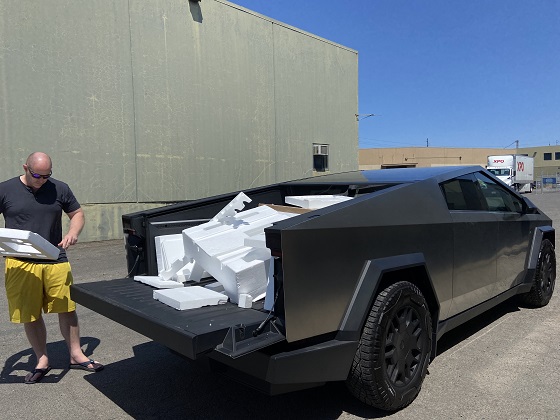
EPS is lightweight—but that’s the trap. It’s mostly air, so it takes up space quickly. In many areas it’s not accepted in the recycling wheelie bin, which means loose foam can pile up behind stores or at depots during the Christmas rush.
When EPS stacks up, businesses typically face four headaches:
Storage blowouts: cages and skips fill with “air” instead of value.
Higher transport costs: hauling uncompacted EPS is basically hauling empty space.
Contamination risk: foam in the wrong stream can contaminate other recyclables.
Landfill pressure: bulky EPS can take up disproportionate space if it’s disposed of instead of recycled.
A practical recycling plan for retailers and warehouses
The most workable approach in peak season is simple: separate, densify, and move it as a commodity—not as waste.
1) Set up clean EPS sorting at the source
Keep EPS foam dry and free of tape, labels, food residue, and mixed plastics. “Clean EPS” is far easier to process and more attractive to downstream recyclers.
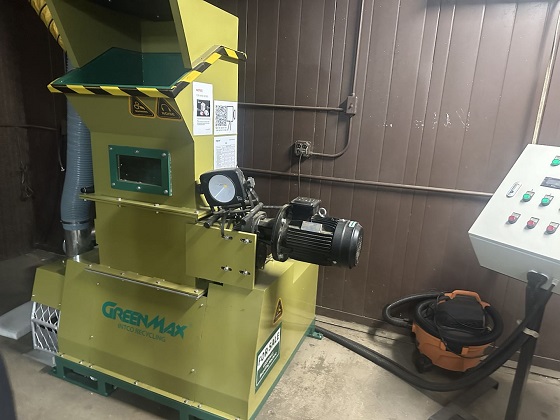
2) Densify on-site with a GREENMAX EPS recycling machine
GREENMAX solutions are designed to reduce EPS volume dramatically, so warehouses and retail DCs can keep up during December spikes.
For higher-volume sites, GREENMAX EPS hot melting machine can convert loose foam into dense ingots—making storage and transport far more efficient. Typical outcomes include major volume reduction (often cited up to 90:1 depending on material and model), which translates into fewer collections and better site housekeeping.
3) Create a reliable outbound pathway
Once EPS is densified into blocks/ingots, it becomes easier to:
schedule fewer collections,
load more material per pickup,
and maintain a consistent recycling routine even when peak season hits.
Customer examples: how Australian operations handle EPS at scale
QLS Group (Australia) — multi-site distribution centres
When packaging volumes rise, consistency across sites matters. In a published GREENMAX case story, QLS Group trialled a GREENMAX M-C300 at its Brisbane distribution centre and, after proving the process, expanded the same approach to Sydney and Melbourne. The result was three M-C300 units across three DCs, helping the business keep loose polystyrene foam from overwhelming storage areas during high-throughput periods.
JB Hi-Fi — retail delivery operations
EPS from delivery packaging can pile up quickly when electronics and appliances move in Christmas volumes. A GREENMAX case write-up describes JB Hi-Fi collecting packaging from its delivery operations (including polystyrene foam) and ordering a GREENMAX MARS-C200 (with conveyor) to improve how that foam is handled and processed on-site. Hot-melt densifying is used to turn bulky loose foam into compact material for easier storage and transport.
A greener Christmas that still runs on time
Christmas demand isn’t going away—but landfill-bound EPS doesn’t have to be part of the tradition. With the right on-site setup and a properly sized GREENMAX EPS recycling machine, retailers and warehouses can turn a messy seasonal spike into a controlled, measurable recycling stream.
Wishing you and your team a happy, safe, and genuinely lower-waste holiday season in Australia.