 Select Languange
 English
 Spanish
 Polish
 Japanese
 Italian
 French
Styrofoam recycling in Australia for businesses
If your site receives product deliveries, chances are Styrofoam shows up every week—sometimes every day. The issue usually isn’t “Can we recycle it?” The issue is that Styrofoam recycling becomes operational: it takes space, it creates overflow, and it pushes collection frequency up.
This page focuses on Styrofoam recycling for Australian businesses—how to keep the stream clean, how to set up a reliable pathway, and how to make the economics work when volumes are consistent.
Why Styrofoam recycling becomes a cost problem on commercial sites
Styrofoam creates a very specific business headache:
Bins look full fast (even when they’re light)
Back-of-house space gets eaten up by bulky material
Handling time adds up (moving, bagging, containing overflow)
Collections become frequent because volume—not weight—drives the schedule
That’s why Styrofoam recycling for businesses is less about “good intentions” and more about a repeatable workflow.
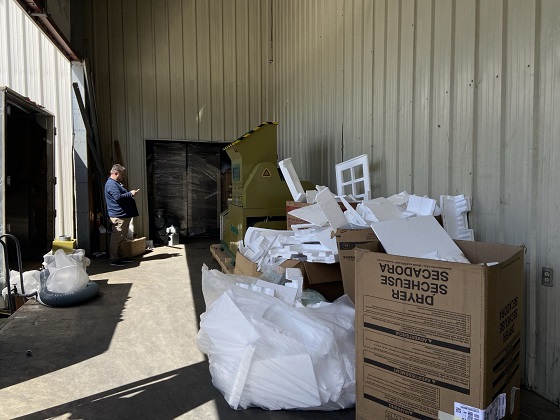
What makes Styrofoam recycling actually work
Styrofoam recycling runs smoothly when the material is:
Clean/ Dry/ Separated from non-foam items/ Contained (so it doesn’t break into loose pieces around the site)
If the stream is contaminated or heavily mixed, it’s more likely to be rejected or priced unfavourably by service partners.
How to prepare Styrofoam for recycling on-site
These steps sound basic, but they prevent most of the “rejected load” and “messy storage” problems:
1. Keep it clean and dry
Store it under cover. Wet Styrofoam is harder to handle and more likely to cause issues.
2. Remove attachments
Strip tape, labels, straps, cardboard inserts, and plastic film. Quick sorting here saves time later.
3. Contain it properly
Use bulk bags, cages, or dedicated bins. The goal is a controlled stream that stays tidy.
4. Avoid shredding or breaking it into small fragments
Small pieces travel everywhere and increase contamination risk.
The main pathways for Styrofoam recycling (business use)
1) Scheduled commercial collection
Best when your volumes are moderate and consistent.
A reliable collection schedule works well if the material is prepared properly (clean, contained, separated). If it’s not, costs usually creep up through extra handling and lower acceptance.
2) On-site volume reduction (best when volume is the real problem)
Best when your Styrofoam fills space quickly and forces frequent pickups.
For many businesses, the cost driver is obvious: you’re paying to move bulky material. This is where volume reduction changes the equation.
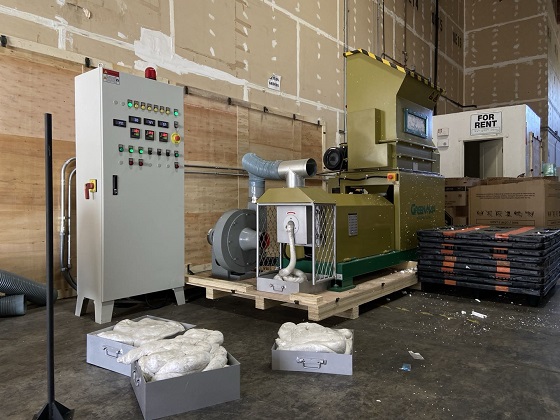
Styrofoam recycling at scale: why a styrofoam densifier changes the economics
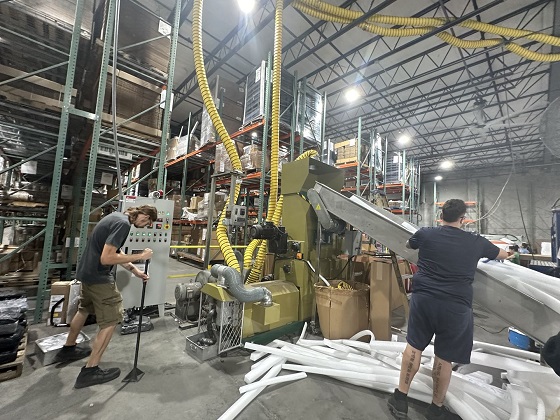
A styrofoam densifier reduces volume on-site so your Styrofoam recycling stream becomes:
Easier to store (dense, stackable output instead of bulky overflow)
Cheaper to transport (fewer collections because you’re not moving air)
Simpler to manage (cleaner workflow with less daily handling)
Signs your site is ready for a styrofoam densifier
A styrofoam densifier is usually worth considering when:
Styrofoam is generated weekly or daily
Bins are “full” quickly and storage becomes a constant issue
Your team spends time managing overflow and keeping the area tidy
Pickups are frequent and still don’t feel under control
How GREENMAX supports Styrofoam recycling in Australia
GREENMAX supplies solutions used by businesses that need a practical approach to Styrofoam recycling—especially where a styrofoam densifier can reduce volume and stabilise collections.
Australia coverage: We service businesses across Australia via our exclusive local Australian agent, with on-site support.
To recommend the right setup, we typically only need:
How much Styrofoam you generate per week
How you store it today
How often you want collections after volume reduction
FAQs
Is Styrofoam recycling realistic for businesses in Australia?
Yes—when you treat it as a dedicated stream with clean handling and a consistent pathway (collection and/or on-site volume reduction).
Why does Styrofoam recycling get expensive?
Because volume drives storage and collections. The material is light, but it fills bins quickly.
What’s the fastest way to improve Styrofoam recycling performance on-site?
Control the stream: keep it clean, keep it dry, separate it, and contain it. That alone improves acceptance and reduces mess.
What does a styrofoam densifier change?
It reduces volume on-site so storage is simpler and collections can be less frequent, which usually improves the overall economics of Styrofoam recycling.