 Select Languange
 English
 Spanish
 Polish
 Japanese
 Italian
 French
Recycling PE Foam and Polystyrene Packaging Waste in the Solar Battery Industry
Funding Support for Recycling Equipment
Businesses in NSW may be eligible for government funding through NSW EPA recyclingprograms when investing in equipment that reduces waste and improves recycling outcomes
GREENMAX can assist businesses by providing technical information, equipment specifications and supporting documentation to help with the funding application process.
The solar battery industry across Oceania has expanded rapidly in recent years. In Australia and New Zealand, more households and businesses are installing energy storage systems to maximise the benefits of solar power.
As demand for battery storage grows, distributors, warehouses and installation companies are handling a much larger volume of equipment shipments. Along with this growth comes a less obvious but very real challenge — packaging foam waste.
Most solar battery systems are shipped with protective packaging such as PE foam sheets and expanded polystyrene (EPS). These materials are essential for protecting heavy lithium battery modules during transportation, but once the equipment is unpacked they quickly become bulky waste.
For businesses involved in solar battery distribution, logistics or installation, managing this packaging foam efficiently is becoming an increasingly important issue.
Where Solar Battery Packaging Foam Waste Comes From
Packaging foam is generated at several points in the solar battery supply chain.
One of the largest sources is solar battery distributors and warehouses. Imported battery systems usually arrive packed with thick EPS inserts, foam corner protectors and PE foam sheets designed to protect the equipment during long-distance shipping.
Once the shipments arrive, the packaging materials are removed before the batteries are stored or prepared for delivery.
Solar equipment wholesalers also generate packaging waste when unpacking battery storage units, hybrid inverters and control components.
Another common source is solar installation contractors. Installers frequently unpack battery systems directly at residential or commercial job sites. After installation is complete, leftover packaging materials such as EPS blocks and PE foam sheets must be collected and disposed of.
Because foam packaging is lightweight but extremely bulky, even a small number of shipments can generate large volumes of waste.
Solar Industry Packaging Waste Statistics
The rapid growth of renewable energy installations is also increasing the amount of packaging waste generated throughout the solar supply chain.
Australia is one of the world’s leading markets for rooftop solar, and battery storage adoption continues to grow as households look to store excess solar energy. Each battery system is typically shipped with multiple layers of protective packaging.
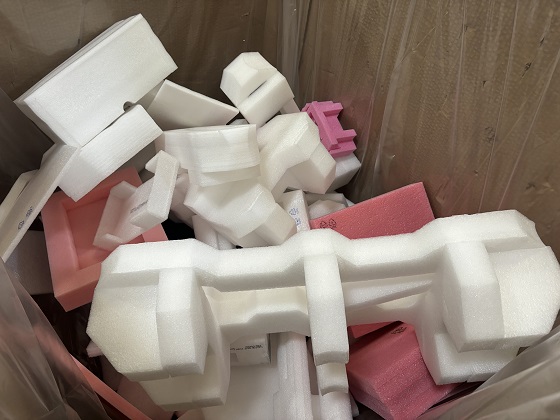
This packaging often includes PE foam cushioning, EPS protective inserts, and foam corner protectors designed to absorb shock and prevent damage during transportation.
Although these materials are lightweight, they take up a large amount of space once unpacked. For distributors handling frequent shipments, packaging foam waste can quickly accumulate in warehouses and storage areas.
As the solar battery market expands across Australia and New Zealand, efficient EPS foam recycling solutions for solar equipment packaging are becoming increasingly important.
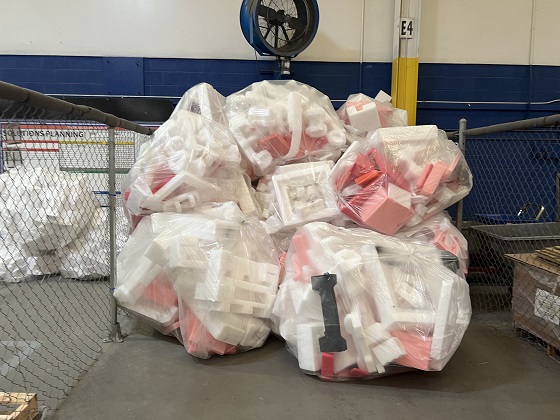
Why PE Foam and Polystyrene Are Difficult to Dispose Of
Both PE foam and expanded polystyrene are recyclable plastics, but recycling them in loose form is not always practical.
Foam packaging contains up to 98% air, which means it occupies significant space in bins and skip containers. Transporting loose foam to recycling facilities can therefore be inefficient and costly.
At the same time, landfill levies across Australia and New Zealand are increasing, encouraging businesses to reduce waste and improve recycling practices.
For companies dealing with regular shipments of solar equipment, sending packaging foam directly to landfill is becoming less sustainable.
A Practical Solution: Foam Melting Machine
A practical solution for managing packaging foam waste is using a foam melting machine, sometimes called a foam densifier.
GREENMAX foam melting machines are designed to process packaging materials such as PE foam and polystyrene. By applying heat and compression, the machine melts the foam and significantly reduces its volume.
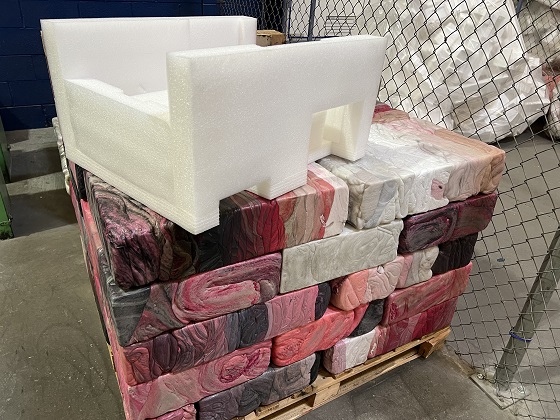
In many cases, foam waste can be reduced by up to 90:1, turning loose packaging materials into compact plastic blocks.
These blocks are much easier to store and transport, and they can be sent to recycling facilities where the plastic material can be reused in manufacturing.
For solar battery distributors and warehouses, densifying foam waste helps free up valuable storage space while reducing waste collection costs.
Supporting Sustainable Growth in the Solar Battery Industry
As the solar battery industry continues to expand across Oceania, responsible waste management is becoming part of everyday operations.
Handling packaging foam efficiently not only improves warehouse organisation but also supports the environmental goals of the renewable energy sector.
By installing a GREENMAX foam melting machine, businesses involved in solar battery distribution and installation can convert bulky packaging foam into manageable recyclable material.
Instead of sending large volumes of PE foam and polystyrene to landfill, companies can reduce waste volume, lower disposal costs and contribute to a more sustainable solar energy supply chain.
Frequently Asked Questions
Can PE foam and polystyrene from solar battery packaging be recycled?
Yes. Both PE foam and expanded polystyrene (EPS) used in solar battery packaging are recyclable materials. Because foam contains a large amount of air, many companies first use a foam melting machine to reduce its volume before transporting it to recycling facilities.
How do solar battery distributors manage packaging foam waste?
Solar battery distributors typically generate foam waste when unpacking battery modules, inverters and energy storage systems. Many companies manage this waste by using foam melting machines to convert bulky packaging foam into compact recyclable blocks.
What machine is used to recycle EPS and PE foam packaging?
A foam melting machine is commonly used to recycle EPS and PE foam packaging. The machine melts or compresses the foam and reduces its volume by up to 90 times, making the material easier to store, transport and recycle. Solutions such as GREENMAX foam melting machines are widely used by warehouses and logistics centres.