 Select Languange
 English
 Spanish
 Polish
 Japanese
 Italian
 French
EPS Packaging Recycling in New Zealand: A Council-Focused Reality Check (and a Practical Path Forward)
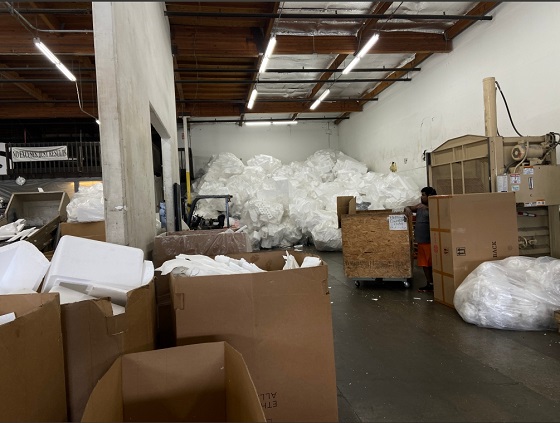
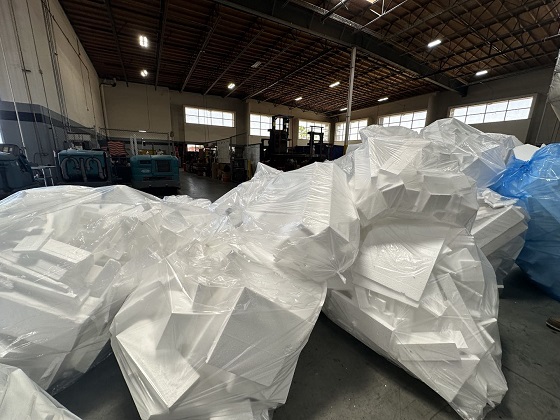
Expanded polystyrene (EPS) packaging is everywhere in New Zealand—protecting fridges, TVs, small appliances, and the endless stream of e-commerce deliveries. It’s also one of the most frustrating waste streams for councils and contractors: bulky, lightweight, easily contaminated, and expensive to move.
The scale is not trivial. Plastics New Zealand points out that over 5,000 tonnes of EPS packaging enters NZ supply chains each year, and nearly 77% still ends up in landfill or as environmental pollution, largely because collection and recycling systems remain limited.
At the same time, public expectations are rising. People assume “recycling” should include foam—especially when it’s clearly “packaging” rather than a dirty food item.
FAQs (NZ – EPS Packaging Foam)
Is EPS (polystyrene #6) accepted in kerbside recycling in New Zealand?
Usually not. NZ’s standardised kerbside recycling generally accepts plastic #1, #2 and #5. #6 polystyrene/EPS isn’t included, so it needs a separate drop-off option.
What EPS foam are we talking about here?
Mainly clean white packaging foam from appliances and online deliveries (TVs, small appliances, electronics). This is the easiest stream to manage and sort.
Why don’t councils just take foam in the yellow bin?
Because it causes problems. EPS is bulky and often contaminates kerbside loads. It’s better handled through a dedicated drop-off stream.
Where can residents take EPS packaging foam instead?
Most councils that accept it do so at a resource recovery centre / transfer station. Some areas also list approved drop-off points through recycling directories (e.g., polystyrene maps).
Does foam need to be “clean”?
Yes. Clean, dry EPS only. Remove tape, labels, plastic wrap, and any loose rubbish. Dirty foam may be refused.
Why is EPS so costly to handle?
It’s mostly air. You run out of space fast, and transport costs add up even when the load is light. This is why some sites set limits or charge fees.
Do councils in NZ actually recycle EPS, or is it still going to landfill?
Some councils have documented pathways where EPS is processed and made into new products (for example, Palmerston North notes recycling into items like picture frames and decorative mouldings).
Why do EPS programs often use a compactor/densifier?
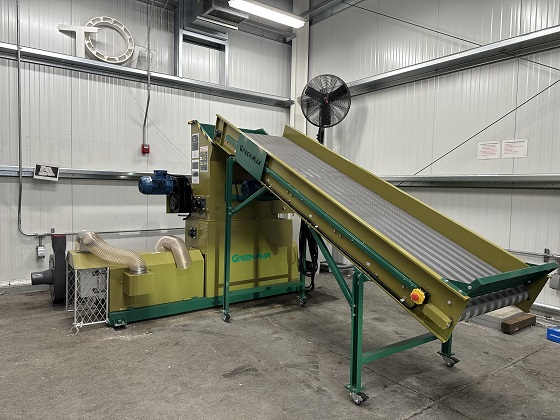
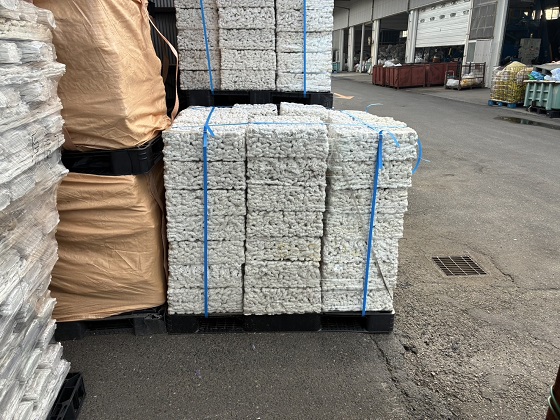
To make it practical. Densifying turns loose foam into dense blocks, which are easier to store, load and transport. Manawatū District Council described using an EPS recycling machine to compress EPS into smaller blocks for handling and recycling.
Should we charge for EPS drop-off?
Many sites do. Fees help cover labour, storage and transport, and they reduce dumping. Palmerston North publishes a fee for polystyrene drop-off.
How much EPS can a household bring in?
It depends on the site. Some councils set a simple per-visit limit (often around a “car boot” or “up to 1m³” style limit). Check the local rules before you arrive.
Why EPS packaging is a council problem (even when kerbside won’t take it)
From 1 February 2024, New Zealand’s kerbside recycling has been standardised. Councils (territorial authorities) are required to align what they accept, and the headline change for plastics is simple: kerbside collections accept plastics #1, #2 and #5—not #6 (polystyrene/EPS).
So even if residents want to do the right thing, EPS packaging has to be handled outside kerbside. In practice, that pushes councils toward:
drop-off at resource recovery centres / transfer stations
partnership models with specialist processors
education and contamination control (only clean foam, no tape/labels/food residue)
This is exactly why the “need” for EPS recycling shows up as a council service design challenge rather than a household sorting issue.
What demand looks like on the ground: NZ council examples you can cite
Even though there isn’t a single national dataset listing “EPS tonnes per council,” several councils have publicly documented services that show real demand—especially for clean household packaging foam.
Palmerston North: clear rules, clear pricing, packaging-focused messaging
Palmerston North City Council explicitly frames polystyrene (#6) as the foam used to pack electronics, appliances and toys, and lets residents drop off up to 1 cubic metre at a time (around 10kg). It’s then recycled into products like picture frames and decorative mouldings. The council also sets a straightforward fee: 70 cents per 100 grams.
This is useful because it proves two things:
1. councils can run a manageable drop-off program for packaging foam, and
2. pricing is often needed to cover handling for a bulky stream.
Manawatū District: trial → partnership → compaction
Manawatū District Council describes an EPS recycling trial delivered via partnership, where the processor uses a machine to compress polystyrene into smaller blocks to make transport practical.
That single detail—compression—is the turning point for most EPS programs. Without densifying/compaction, councils pay to ship air.
The real bottleneck: volume, logistics, and contamination
For appliance and e-commerce foam, the operational blockers are usually:
Storage space at transfer stations (foam fills bays fast)
Transport efficiency (bulky loads hit the truck long before they hit weight limits)
Contamination (tape, labels, mixed plastics, food residue = rejected loads)
Inconsistent public behaviour (people assume kerbside should take it, then it becomes contamination in the yellow bin)
Kerbside standardisation helps reduce confusion across regions—but because EPS is excluded, councils still need a separate, well-communicated pathway to prevent it going straight to landfill.
A practical “NZ-wide” playbook for EPS packaging collection
If you’re positioning a council- or contractor-facing solution nationwide, the strongest structure is:
1) Start with clean EPS packaging only
Keep the message tight:
“Clean white packaging foam only”
“No food containers, no loose-fill peanuts (unless specified), no dirty foam”
“Remove tape and labels where possible”
This reduces rejection risk and protects downstream relationships.
2) Make drop-off convenient and predictable
A weekly or daily drop-off window at key resource recovery sites beats a vague “maybe accepted” policy. Consistency is what reduces kerbside contamination.
3) Densify on-site to cut cost per tonne moved
Councils that succeed with EPS typically lean on compaction/compression to reduce volume before hauling. Manawatū’s model makes this explicit.
4) Lock in the processor pathway first
Palmerston North publicly states where
their polystyrene goes and what it becomes, which supports resident confidence
and participation.
Even if you don’t share the full chain publicly, having a stable offtake is the
difference between “pilot” and “program.”
Where GREENMAX fits: turning foam from a space problem into a transportable commodity
For councils, transfer stations, and waste contractors, the job isn’t just “accept EPS.” The job is making EPS manageable—operationally and financially.
That’s where an EPS recycling/compaction solution can help:
reduce volume so storage areas stop overflowing
standardise output (dense blocks/ingots) so transport is planned, not reactive
support partnerships with processors by supplying cleaner, denser feedstock
And it aligns with the national reality: EPS won’t be solved through kerbside alone, because the standardised kerbside rules don’t include it.